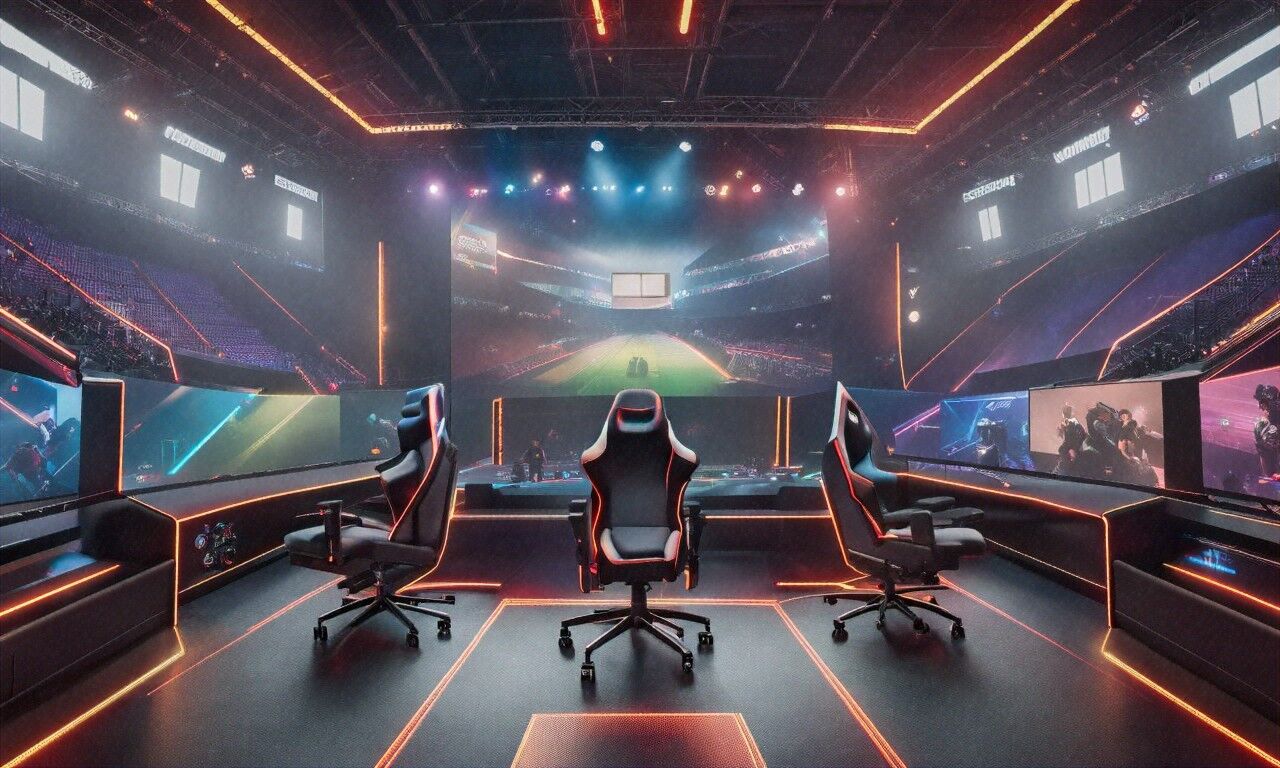
Mobile esports out-earns Hollywood yet still gets the eye-roll. The money moved first. Respect is only now catching up.
More revenue in 2025 than the entire worldwide film business. Mobile gaming, that is, against Hollywood and everything around it: box office, streaming rights, merchandise, the whole pile combined. Sit with that for a second, because it doesn’t square with how the larger gaming crowd still talks about the cutthroat side of phones. Pro players going after prize pools in the millions, eyeballs that line up against the older esports circuits, and the reflex is to wave it off unless there’s a desk and a mechanical keyboard somewhere in the shot. I keep watching that chasm between what the money says and what the respect says. It’s closing, slowly, but the lag is real and a little embarrassing.
Start with the prize money, since that’s the part nobody can argue with. Mobile esports pools have climbed roughly 40% year over year since 2023, and once you see the actual numbers the dismissiveness gets harder to defend. The 2025 PUBG Mobile Global Championship pushed out over $6 million across its circuit. Honor of Kings, the Tencent MOBA most Western fans still wave away, ran a world championship with $10 million on the table. Free Fire’s World Series put up $2 million. Over at Mobile Legends Bang Bang, the World Championship, $3 million. Arena of Valor’s International Championship sat at $1.5 million. None of these are one-and-done marketing gimmicks. They’re annual, with set formats and crowds that run into the tens of millions.
Want the comparison that actually stings? The 2025 Valorant Champions Tour came in around $8 million total, and the League of Legends World Championship offered $2.2 million. So you’ve got mobile tournaments out-paying their PC cousins inside the same genre. That’s not nothing. And the reason underneath it is boring, which is usually how you know it’s true: mobile games pull in way more money than PC games worldwide, so publishers are funneling a slice of that back into competitive systems built to keep people hooked. Follow the cash, basically. It tends to tell you where the sport is really headed before the culture cops to it.
If anyone proved this could hold up, it was probably PUBG Mobile. Krafton and Tencent didn’t just shove the PC game onto a touchscreen and hope. They put together an entire tournament structure from the ground up, regional leagues feeding international finals, real team org charts, broadcast production that, honestly, stands toe-to-toe with anything on PC. The PUBG Mobile Pro League runs across regions at once, South Asia and Southeast Asia, the Middle East, the Americas, all season. Here’s the part I think matters most, though. Cost of entry is a phone. That’s it. No $2,000 gaming rig, no $500 console. In India, in Indonesia, in Brazil too, where that kind of PC rig is just out of reach for most people, a phone cracked the door open to pro play that simply wasn’t there a few years back. Some of the best PUBG Mobile players going right now came up on cheap Android handsets, grinding open qualifiers out of their bedrooms. Think about that route compared to what it costs to break in to, say, old-school console esports. Different sport entirely.
And don’t let the “it’s shallow” line slide either, because it doesn’t survive contact with an actual match. At the top, PUBG Mobile team coordination, the rotations, the resource calls, it’s every bit as layered as the PC build. Arguably tighter in spots, since they’re pulling it off on glass. Teams keep analysts and coaches who pick apart circle patterns, draw up plans for specific map pockets, sit through VODs frame by frame the way a football staff chews on game tape. I’ve watched high-level lobbies where the read-and-react speed was honestly hard to track. Split-second calls, same ferocity you’d see from any PC pro. The whole “mobile is casual” line crumbles once you’ve actually clocked what these players do under pressure.
Krafton’s been sharp about the pipeline too, which is the unglamorous work that decides whether a scene lasts. Anti-cheat built ground-up for mobile, not bolted on. Minimum hardware rules to even out device differences at events. A marked path running amateur to semi-pro to pro. The PUBG Mobile Club Open is the grassroots door. Above it sits the Pro League. At the peak, the Global Championship. It hands a player clear rungs to climb toward, which sounds small until you’re trying to convince a talented sixteen-year-old (and their skeptical parents) that this is a job and not a way to waste a weekend. Career ladders matter. Sports figured that out a long time ago, give or take a century, and mobile is just running the same playbook.
the strange case of Genshin and what counts as a sport
Then there’s Genshin Impact, doing something really odd. HoYoverse’s open-world action RPG was never meant to be cutthroat. No PvP, no ranked ladder, no official circuit. None of it. A competitive community grew anyway, the way weeds come up through pavement, built around speedrunning the Spiral Abyss endgame and pushing damage numbers to a frankly unhealthy point. Who clears Spiral Abyss Floor 12 fastest. Whose single hit on a weekly boss lands biggest. Which madman beats the hardest content using the weakest characters on purpose. These runs get traded on YouTube and Bilibili, taken apart on Reddit and NGA (a big Chinese gaming forum), tracked in community-run databases that nobody at HoYoverse asked for. Organizers have even shaped some of it into events with real prize money, small next to PUBG Mobile or Honor of Kings, sure, but real. Does it slot cleanly into the older esports buckets? Probably not. It’s growing all the same, and the backers have noticed.
The gacha thing is the big snag in any Genshin competition. Characters and weapons come out of a randomized pull tied to spending, so a player sitting on every limited 5-star with their signature weapons just has more tools than a free-to-play one. Imagine a track meet where some runners bought faster shoes. Community’s hacked together fixes, mind you. Some events lock teams to standard characters. Others split free-to-play and paying players into separate brackets. Leaderboards people actually respect rate performance against how much someone’s spent, not raw output alone. HoYoverse, for its part, keeps sending mixed signals. They’ll sponsor a community event, lend promotional weight to a tournament, then refuse to add any official PvP or ranked mode. Their worry, from what I can tell, is that real competition would push players to spend on pulls just to stay level, and that pay-to-win stink could bruise the game’s name. I think that worry’s probably fair. Competitive play keeps growing anyway, finding sideways routes to live inside a game built for cooperation.
You want to know where this is genuinely going? Follow the sponsors. Peripheral makers, phone brands, energy drink companies, they’ve all clocked mobile esports as a cheap, fast way to reach young crowds in markets that are still climbing. Qualcomm backs PUBG Mobile events to sell Snapdragon chips. Samsung and ASUS put their names on teams and tournaments to tie their devices to competitive performance, OnePlus too. And the money isn’t only from gaming-adjacent brands, which is the tell. Saudi Arabia’s Savvy Gaming Group has dumped billions into esports infrastructure with mobile titles right up front in the plan. India’s mobile scene has pulled investment from serious venture firms and even traditional sports franchises hunting for a second act. Down in Brazil, the Free Fire scene has signed deals with mainstream names like Banco do Brasil and Claro. When a bank and a telecom are putting their logos on a roster, something’s moved. That’s institutions outside gaming taking it seriously, and that kind of outside stamp speeds up professionalization in a hurry.
the controller war nobody can settle
The loudest fight in the space right now is probably the controller question. Should competitive mobile gaming let people use external controllers, or is touchscreen the only honest input? Sounds simple. It isn’t. Underneath, that one question tangles up fairness and accessibility, questions of identity, and what makes mobile its own thing in the first place. No consensus anywhere. Different games, different organizers, different rulings, and everybody’s got a take they’ll defend to the death. Touch-only purists argue mobile is a separate sport precisely because of the input. Playing a shooter on glass asks for different skills than a controller or a mouse and keyboard, full stop. Thumb-based aim, the claw grips, the custom HUD layouts, all of that is native to mobile and nowhere else. Their line is blunt: want a controller, go play console. I get the logic. There’s a purist argument buried in there that I’m at least half sympathetic to.
But the case for allowing controllers isn’t weak either. Some players have physical limitations that make touchscreen play hard or flat-out painful over a long session. Controllers can ease repetitive strain. And from a pure who-deserves-to-win angle, the argument runs that the best player should take it regardless of input, and splitting people by device starts to feel iffy. Call of Duty Mobile and Fortnite Mobile already split matchmaking by input type, so coexistence is clearly doable on a technical level. Still, the big tournaments have mostly held the touch-only line so far. PUBG Mobile’s official events ban external controllers and trigger accessories outright. Mobile Legends and Honor of Kings are built for touch and don’t even support controllers in the first place. Pressure to budge is building, though, especially as players raised on console drift over and find touch controls maddening. Hard to say how long that wall holds. A few more seasons, maybe.
And then you’ve got the genuinely weird grey zone around peripherals. Trigger clips that snap onto the phone and give you physical buttons over the shoulder regions of the screen, technically still touch input (you’re activating the touch panel either way) but they hand you a mechanical edge. Some tournaments ban them. Others shrug and allow them. That inconsistency just breeds confusion. Then there are gaming phones, the ASUS ROG Phone series with shoulder triggers baked right into the chassis. Is that a controller, or just a phone? Hard to say, honestly. The lines are blurry in a way that’s going to bite the scene unless somebody writes clearer rules before it turns into a real mess.
Device disparity is its own pain, and it’s one PC and console esports basically don’t have. In a PC tournament, organizers wheel out identical machines for everyone. Console, same hardware all around. Mobile? The phone in your hand can swing the result. A flagship purring along at 120fps with low input latency just beats a mid-range unit chugging at 60fps with the occasional frame drop, and no amount of skill fully erases that. Big LAN events deal with it by handing everyone the same device, recent PUBG Mobile tournaments have run on the iPhone 15 Pro Max or the Samsung Galaxy S24 Ultra. Online qualifiers are a whole different animal. Those make up the lion’s share of competitive matches. There, you play on whatever you own. Some kid on a three-year-old budget phone is grinding uphill against somebody holding the newest flagship. Frame rate, touch response, screen size, thermal throttling once a long session heats the chassis, all of it swings wildly across the mobile range.
That points at a bigger fairness problem I don’t think gets enough air. PC players have always lived with performance gaps from their own rigs, granted. But the spread between a high-end and a low-end phone is often rougher than the PC version. Some organizers have set minimum device specs for online play. Enforcing it is a nightmare, and the rule itself can lock out exactly the lower-income players mobile esports was supposed to reach in the first place. Which is the cruel irony of the whole thing. There’s no clean fix, and from what I’ve seen most orgs are still feeling around in the dark on it.
Competitive mobile has also spun up a content machine that’s almost bigger than the competition itself. On YouTube, PUBG Mobile and Free Fire clips routinely rack up hundreds of millions of views a month. Streaming platforms (YouTube Gaming, Facebook Gaming, plus regional ones like Booyah and Nimo TV) carry thousands of mobile streamers. In India alone, mobile content makes up the bulk of gaming viewership on YouTube, carried by creators like Jonathan Gaming and Mortal and Scout, all of whom built enormous followings off PUBG Mobile. Content feeds the scene and the scene feeds the content, around and around. Popular streamers play the tournaments, which pulls eyes. Tournament highlights get sliced up and flung across social, which pulls new players. Teams sign creators alongside their competitive rosters and build media properties that turn a profit on sponsorships and merch even when nobody’s lifting a trophy. A self-reinforcing loop, basically. The kind every sport wishes it had.
What sets mobile content apart from the PC stuff is mostly the shape of it. The videos run shorter, lean harder on personality, and get built for vertical viewing on a phone. Makes sense, given the audience is watching on the same slab they’d use to play. TikTok and YouTube Shorts have turned into major pipes for mobile highlights. A 30-second clip of some absurd play reaches people who’d never park themselves in front of a two-hour broadcast. That shifts who becomes a fan. It shifts how fast a scene can grow. And it means mobile esports came with marketing rails built in, the exact thing PC esports has scratched at for years and never quite nailed.
The map of mobile esports looks almost nothing like the PC one, which still trips people up. PC competition has long leaned on North America, Europe, South Korea, and China. Mobile’s deepest roots run through South and Southeast Asia, the Middle East, and Latin America instead. India’s PUBG Mobile scene took a short ban that wrecked everything for a stretch, then clawed back to become one of the most rabid competitive communities on the planet. Indonesia and Thailand keep churning out strong teams across multiple titles. Over in the Middle East, you’ve got a real power now, partly off deliberate government money, with Saudi Arabia and the UAE pouring money into the buildout and putting mobile at the center because smartphone penetration there blows past console or PC ownership.
Latin America runs on Free Fire, and it’s a phenomenon all its own. Garena’s battle royale caught fire across Brazil and Mexico, Colombia too, and the reason is almost laughably simple. Lower hardware needs. Free Fire runs clean on very modest Android phones, which let in players who could never afford the gear for PUBG Mobile or Genshin Impact. The Brazilian Free Fire community is huge, filling arenas, putting up TV-grade viewership, drawing mainstream sponsors. Good reminder that getting in the door often beats technical polish when you’re trying to build a competitive base from scratch. Might be the single most useful thing mobile esports has to teach the older gaming world, and it’s the lesson PC was always too comfortable to learn.
Cloud gaming tosses a real complication into all of this. Xbox Cloud Gaming, NVIDIA GeForce Now, Amazon Luna, all increasingly live on phones. So if you stream a PC-grade game to your handset, is that mobile gaming? Input’s touch, the device is plainly a phone, but the game itself is running on a server sitting in some warehouse a thousand miles off. For now, mobile esports doesn’t count cloud-streamed play as mobile. That line’s going to smear as the services sharpen and latency drops. And there’s the phone-and-handheld blur on top of it. The Steam Deck, ASUS ROG Ally, and Lenovo Legion Go all sit in a fuzzy middle between phone and PC. Nintendo’s Switch successor will probably muddy it further. As the hardware keeps converging, the buckets we lean on to sort competitive gaming (PC, console, mobile) might start feeling outdated, the way “long-distance call” stopped meaning anything.
Mobile silicon keeps eating into the gap with dedicated machines, too. The Snapdragon 8 Gen 4 and Apple’s A19 Pro put up GPU numbers that would’ve passed for a serviceable mid-range gaming laptop just three or four years ago. Ray tracing on a phone isn’t a spec-sheet gimmick anymore. It runs, you can see it, and it gets quicker with every chip generation. As phones grow stronger the games get heavier, and the competitive ceiling rises right alongside. Could be wrong, but I think we’re maybe five years out from a point where the performance gap between phone and PC gets small enough that, for most titles, the distinction barely shows.
What I keep circling back to is that crowd in Riyadh. Young. Loud. And completely unbothered by the fact that the top-tier competition in front of them was being played on phones. No novelty in it for them, no curiosity, nothing to explain away. Just how competitive gaming works. They came up with a smartphone as the main gaming device, so the idea that “real” gaming needs a PC or a console reads to them about the way “real” music needing a physical instrument reads to the rest of us. Quaint. Competitive gaming won’t tip all the way to mobile, I don’t think. But it’ll lean a lot more mobile than the past did, and the players and teams and orgs that catch that early are the ones who’ll be sitting pretty down the line.
So next time somebody writes off mobile esports as the junior-varsity version, point them at a high-level PUBG Mobile match. Watch four-finger claw grip players landing headshots at 200 meters on gyroscope aim. Look at the split-second grenade cooks, the pixel-tight car plays. Then there’s a squad running a coordinated compound push with the discipline of a drilled unit, all of it on a six-inch touchscreen. Where it all lands in five or ten years, though? We’ll see.

(0) Comments