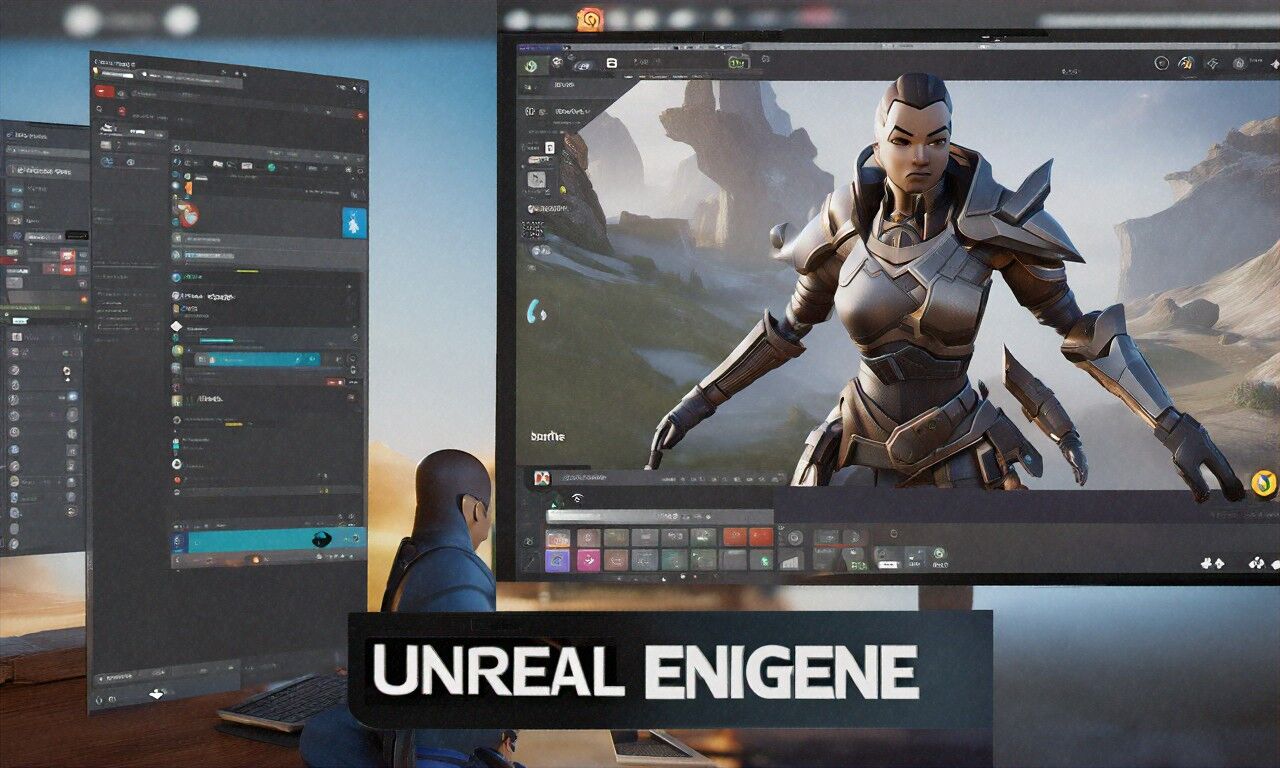
Okay so this is something I’ve been thinking about for a while now. The game engine situation in 2026 looks nothing like it did three years ago, and I think most people still haven’t fully processed how much the ground shifted. Unity’s per-install runtime fee announcement in 2023, the one that nearly imploded the company, didn’t just damage Unity. It cracked open a conversation about engine dependency, corporate trust, and what developers actually owe the platforms they build on. Studios that had been loyal Unity users for a decade suddenly started evaluating Unreal, poking around Godot, even dusting off custom engine experiments they’d shelved years earlier. The CEO resigned. The policy got walked back. But none of that mattered much because the psychological damage was already done. Developers remembered. They’re still remembering.
Before all of that, the two big engines occupied fairly distinct territory. Unity was the accessible one, the engine you picked if you were a small team, a solo developer, a mobile studio, or someone who just wanted to ship something without drowning in C++ boilerplate. Unreal was where you went when you needed the best visuals money could buy and had the headcount to wrangle a beast of an editor. Clean lanes. Everybody understood the split. But when Unity torched its own reputation, those lanes blurred. Unreal started courting smaller developers more openly. Godot’s downloads went through the roof. And a bunch of specialized engines, some open-source, some proprietary) started getting attention they’d never gotten before.
Unreal Engine 5.4 and What It Actually Delivers
Epic shipped Unreal Engine 5.4 in early 2026, and it’s probably the most polished version of UE5 to date. Nanite, their virtualized geometry tech, now handles foliage and skinned meshes in ways that seemed like a pipe dream not long ago. You can dump billions of polygons into a scene and the engine sorts out what needs rendering in real time. For environment artists, this has been freeing in a very practical sense, you skip retopology, import your high-poly sculpts directly, and Nanite just deals with it. No more baking normal maps from a high-poly source onto a low-poly game mesh, at least not for static and semi-static geometry. That workflow change alone has probably saved thousands of collective hours across studios using UE5 seriously.
Lumen matured a lot between the early UE5 releases and 5.4. Early on, indoor scenes had visible artifacts and certain materials looked wrong under software ray tracing. Those problems are mostly gone now. Software ray tracing in 5.4 runs well enough for 60fps on current-gen consoles, and the hardware ray tracing path produces images that could, from what I’ve seen, pass for offline renders in many cases. I loaded up an old 5.1 project recently and switched it over to the updated Lumen pipeline. Light bounce accuracy, shadow softness, the way illumination spills through a doorway into an adjacent room, all noticeably better. Interiors feel like real spaces instead of approximations of real spaces.
MetaHuman has turned into something quietly impressive. What began as a flashy character creation demo now functions as a full production pipeline for digital humans. Over 700 facial blend shapes in the 2026 version. Strand-based hair grooming that actually looks convincing in motion. A body customization system that feels complete rather than bolted on. Film studios use it for pre-visualization. AAA teams use it for final in-game characters. Combined with Lumen’s subsurface scattering on skin, the results sit right in the middle of the uncanny valley: sometimes on the good side of it, sometimes not, but always close enough to be useful for production work.
And yet. Unreal’s complexity hasn’t gone away. It might never go away. First shader compile on a new project still takes forever. Blueprint visual scripting graphs turn into tangled messes on larger projects. C++ compile-and-test loops remain slow compared to what you’d get in a scripting-heavy engine. Epic improved Live Coding stability, and their Verse scripting language (which originated in the Fortnite ecosystem) is starting to appear in broader UE5 workflows. But the learning curve is steep. If you’re one person making a puzzle game, Unreal can feel like overkill in a way that’s not just theoretical — it’s a daily friction that slows you down.
Unity 6 and the Long Road Back
Unity Technologies spent two years trying to recover from the pricing disaster, and Unity 6 is the most convincing evidence they’ve got that the effort was real. Released late 2025, it collapses the old render pipeline mess (URP versus HDRP, pick one at project start and live with it forever, into a single unified rendering system. It scales from mobile hardware up to high-end desktop GPUs. At the top end it doesn’t match Unreal’s raw fidelity, but for the majority of projects, it’s more than sufficient. Most games don’t need photorealism. They need “good enough, running smoothly, on the hardware our players actually own.”
DOTS and ECS are no longer experimental. That’s a big deal. Data-Oriented Technology Stack and Entity Component System used to feel like parallel-universe Unity, a separate programming model bolted onto the side of the engine that maybe worked and maybe didn’t. In Unity 6 they’re part of the core. Projects that choked under the old MonoBehaviour system, tens of thousands of active game objects, complex simulations, big crowds, can now run smoothly. The job system makes multithreading accessible to people who’d have avoided it before. Write your code, tag it for parallel execution, and the engine distributes work across cores. It’s not magic, and you can still write yourself into performance corners, but the floor has been raised considerably.
Editor experience got better too, and I think this matters more than people give it credit for. Domain reloads, that awful pause every time you switch back from code to the editor) have been cut down dramatically. Entering and exiting play mode is nearly instant for small and medium projects. These aren’t the kind of features you put in a trailer. Nobody’s making a hype reel about faster domain reloads. But when you’re spending eight or ten hours a day inside an editor, those seconds add up into minutes and those minutes add up into hours across a production cycle. Unity seems to finally get that developer experience isn’t a secondary concern.
On the business side, the per-install fee is dead. Gone. Unity returned to a subscription model with a more generous free tier, the revenue ceiling before you need a paid license went up. It’s a clear admission, I’d say, that the 2023 pricing move was a disaster. But trust takes longer to rebuild than it does to destroy. Plenty of developers in forums and Discord servers still carry a “fool me once” attitude. They watched Unity try to rewrite the rules with almost no warning, and they’re not confident it won’t happen again under different leadership or different financial pressures. That skepticism seems earned.
Godot’s Moment
No engine benefited more from Unity’s self-inflicted wound than Godot. Downloads and contributor numbers spiked hard after the pricing controversy. Godot 4.3, the current stable release, handles 2D game development with real confidence and is getting more capable on the 3D side with each point release. GDScript feels Pythonic and approachable. The scene system is elegant. And the entire engine is small enough that you can, conceptually at least, understand how the pieces fit together. Try saying that about Unreal. Try saying that about Unity, even.
There’s an ideological dimension to the Godot community that sets it apart. Contributors aren’t just building features — they’re building an alternative to corporate-controlled tooling. The MIT license means nobody can pull a pricing rug, ever. The code is free. It’ll always be free. Anyone can fork it if the project’s direction goes somewhere they don’t like. That ethos pulled in a wave of developers who were fed up with Unity and suspicious of Epic’s long-term plans for Unreal.
But look at where Godot falls short technically. Its 3D renderer improved enormously across the 4.x series, but it still doesn’t compete with Unreal or Unity for high-fidelity visuals. Nothing equivalent to Nanite. Nothing equivalent to Lumen. The physics engine has documented limitations. Console export requires third-party solutions because Sony and Nintendo SDKs don’t play well with open-source licensing. If you’re making a 2D indie game or a stylized 3D title, Godot is a great fit. If you’re trying to ship a realistic open-world game on PlayStation 5, it’s not ready for that. Not yet, anyway.
What’s worth watching is the trajectory. Godot’s rendering team has been building a Vulkan-based clustered forward renderer that shows real promise. Funding has come in from multiple sources, including a notable grant from the Sovereign Tech Fund in Germany. Several mid-sized studios committed to shipping commercial titles on Godot 4, which will stress-test the engine under conditions that hobby projects and game jams simply can’t replicate. The next couple of years will probably determine whether Godot becomes a genuine third pillar or stays a beloved niche tool. Hard to say which way it goes.
Licensing: The Argument That Never Ends
Engine licensing became one of the most heated topics in game development after 2023, and the temperature hasn’t dropped much since. Your engine choice is a huge commitment. It shapes your hiring pipeline, your asset workflows, your deployment targets, and your margins. Unreal’s model is, I think, the most developer-friendly among commercial engines right now: free until your game earns $1 million in gross revenue, then Epic takes a 5% royalty. Most indie developers will never cross that threshold. For studios that do, 5% is a reasonable cut given the tooling you’re getting access to.
Unity’s pricing is more layered even after the post-controversy corrections. Personal, Pro, Enterprise, each tier has different features and obligations. Pro kicks in once your studio crosses a certain annual revenue mark, and Enterprise pricing gets negotiated case by case. It’s not predatory. But it’s not as clean as Unreal’s “free until you’re successful, then share a slice” approach. And every time Unity announces any kind of policy update now, developers read the fine print with magnifying glasses. That level of suspicion didn’t exist before 2023.
Godot doesn’t participate in this conversation at all. No fees. No royalties. No revenue thresholds. Download it, use it, ship your game, keep everything. The only cost is the engineering effort you might spend solving problems that the commercial engines already solved for you. For a lot of developers, that trade-off makes sense. For others, the mature pipelines and tooling of Unreal or Unity justify the licensing cost several times over.
Everything Else: The Specialized Engines
Beyond those three, 2026 brought a wave of specialized engines finding their niches. Here’s a partial accounting of what’s out there:
- O3DE. Amazon’s open-source engine, born from the ashes of Lumberyard, has attracted a small but maybe growing following among developers who need cloud-native multiplayer infrastructure baked into the engine itself.
- Stride (formerly Xenko), serves the C# community that wants Unreal-level ambitions without leaving the.NET ecosystem. Niche, but the people who use it tend to be fiercely loyal.
- Bevy: a Rust-based engine that appeals to systems programmers who care about memory safety guarantees and want ECS-first architecture from the ground up rather than grafted on after the fact.
- id Tech, Decima, RE Engine, proprietary engines maintained by id Software, Guerrilla Games, and Capcom respectively. These exist because their parent studios believe a custom-tailored toolchain gives them a competitive edge worth the enormous cost of maintaining it.
- Various in-house engines, the calculus on building your own hasn’t really changed, though the bar keeps rising. Every feature Epic or Unity ships is another thing an in-house team has to match or accept falling behind on.
More options is, in principle, a good thing. A studio building a narrative walking simulator has different needs than one building a competitive multiplayer shooter. They shouldn’t have to use the same engine just because it dominates market share. But fragmentation has costs too. Tutorials, plugins, community support — all of it gets spread thinner across more platforms. Switching engines mid-career means rebuilding a significant chunk of what you know. It’s a real trade-off, not a free lunch.
Rendering: Still the Biggest Draw
Visuals drive engine adoption more than any other single factor, and the rendering competition between Unreal and Unity hasn’t slowed down. Unreal’s stack (Nanite, Lumen, MetaHuman, and increasingly path tracing as a first-class rendering mode rather than a screenshot gimmick, gives it a clear lead in photorealism. Epic wants real-time path tracing at playable frame rates on next-gen hardware. Based on what’s been shown in 5.4 previews, they’re probably closer to that goal than most people realize.
Unity took a different path. Flexibility and accessibility over raw bleeding-edge fidelity. Their Adaptive Probe Volumes system for global illumination doesn’t look as good as Lumen in direct comparisons, but it runs reliably across a wider range of hardware targets. Unity’s shader graph became genuinely excellent, intuitive enough for artists to use without programmer help, powerful enough for technical artists building complex material setups. And Unity’s acquisition of Weta Digital started producing results in the form of high-end VFX tools integrated into the engine. That Weta integration could be a sleeper advantage if it matures the way Unity hopes.
For most actual shipped games, though, the rendering gap between engines matters less than you’d expect. Art direction beats technical capability every time. Celeste is beautiful because of its art and animation work, not its renderer. Hades looks incredible because Supergiant’s artists are phenomenally talented, not because they had access to real-time global illumination. The engines that tend to win aren’t always the ones with the most impressive GDC demos, they’re the ones that stay out of the artist’s way and let the creative vision come through without friction.
Multiplayer Infrastructure and Backend Services
Both major commercial engines recognized that modern game development increasingly means online, live-service, multiplayer-first. Epic built Epic Online Services, matchmaking, lobbies, voice chat, cross-platform play, and made it free and engine-agnostic. Smart move strategically. Even developers on Unity or Godot can plug into Epic’s backend, which keeps them adjacent to Epic’s ecosystem regardless of what editor they open every morning.
Unity countered by acquiring Multiplay and building out Unity Gaming Services: cloud hosting, matchmaking, analytics, monetization tools. It’s a more tightly coupled offering, designed to work hand-in-glove with the Unity editor. Build in Unity, deploy servers through Unity’s cloud, track players through Unity’s analytics, manage your economy through Unity’s dashboard. Everything under one roof. The pitch is convenient. The risk is lock-in.
And that’s the problem with both approaches, really. If your entire backend runs on Unity Gaming Services and you decide to switch engines for your next project, migration becomes a major undertaking. Same with heavy reliance on Epic Online Services: you’re creating a dependency on Epic’s continued goodwill and pricing stability. Some studios hedge by building custom backend infrastructure or using engine-agnostic solutions like Nakama or PlayFab. Higher upfront cost, but portability and independence in exchange. Seems like a reasonable bet depending on your situation.
Mobile, Web, and the WebGPU Question
Mobile remains Unity’s strongest territory and it isn’t particularly close. Single codebase targeting iOS and Android, small build sizes, efficient performance on lower-end hardware — that combination makes Unity the default for mobile studios. Unreal can target mobile, sure. But builds tend to be larger and more resource-hungry. Fine for a premium mobile title, less ideal for the ad-supported free-to-play games that dominate the mobile revenue charts.
Web deployment is more interesting and more contested. Unity’s WebGL export has been around for years, and Unity 6 improved it with better memory management and faster loading. Unreal’s web support is less mature but getting attention. Godot might actually have the best web story of all three; its small runtime footprint and efficient execution make it well-suited for browser games, and several successful titles have shipped on Godot 4 targeting web platforms.
WebGPU could change all of this. As a browser-standard graphics API offering near-native performance, it opens the door to mid-fidelity 3D games running directly in the browser, not just simple 2D stuff. All three major engines are working on WebGPU backends. Whichever engine nails that support first stands to gain a real advantage in the browser and cloud gaming markets, which are growing even if they haven’t exploded the way some analysts predicted. It’s early days, but worth keeping an eye on.
AI Tools in Game Engines
Can’t talk about game engines in 2026 without mentioning AI integration, even though opinions on it vary wildly across the development community. Unity’s Muse suite includes AI-powered texture generation, animation assistance, and code completion trained on Unity’s API. Unreal added generative AI tools for scene layout, NPC behavior scripting, and dialogue generation. Some developers treat these as productivity multipliers. Others worry about output quality, copyright questions, and what it means for the people whose craft these tools are designed to partially automate. Both reactions seem reasonable to me.
Where AI gets more interesting, and maybe less controversial, is in procedural generation and automated testing. Machine learning models that generate plausible building interiors, populate open worlds with contextually appropriate props, or automatically playtest levels for balance, these tools save studios thousands of hours of manual labor. They’re not replacing designers. They’re handling repetitive, tedious work so humans can focus on the creative decisions that require actual judgment and taste. That distinction matters, even if it sometimes gets lost in the broader AI discourse.
Godot’s approach here has been characteristically decentralized. Rather than baking AI tools into the engine core, the community built third-party plugins and integrations. GDScript copilot extensions, AI animation tools, procedural generation add-ons, all available through the asset library. More modular. Developers opt into exactly what they want without the engine itself getting bloated with features they might never touch. It fits the open-source philosophy pretty naturally.
Picking an Engine in 2026
After spending real time with all three engines this year, here’s roughly where things shake out. If you’re building a visually ambitious 3D game and you’ve got the team to support it, Unreal Engine 5.4 is the most powerful option available. Nothing matches its rendering stack, and systems like MetaHuman and World Partition make it uniquely suited for large-scale, high-fidelity projects. Expect a steep learning curve and longer iteration cycles. That’s the trade.
If you’re building a mobile game, a 2D title, a VR experience, or a mid-scope 3D project where fast iteration and a more forgiving learning curve matter to you, Unity 6 deserves serious consideration. It’s genuinely improved. The team behind it seems to have internalized the lessons from the pricing disaster, though I could be wrong about how deep that goes organizationally. It’s still the most versatile general-purpose engine on the market.
If you’re an indie developer, a hobbyist, or someone who cares about open-source principles on a values level, Godot is production-ready for 2D work and increasingly viable for 3D projects with stylized art directions. The community is active and growing. The engine improves with each release. You’ll never face a corporate licensing surprise. Just go in with clear-eyed expectations about 3D capabilities and console support.
Competition between these three (and the smaller engines around them) has forced faster improvement, fairer pricing, and more attentiveness to developer feedback across the board. The 2023 Unity controversy was painful for a lot of people, but it might have been the single best thing to happen to the game engine market in terms of shaking complacency loose.
A friend of mine, a solo developer who’d been shipping small Unity games for six years, switched to Godot in early 2024 right after the pricing mess. Spent months relearning everything, scene trees instead of GameObjects, GDScript instead of C#, a whole different mental model for how a project fits together. He told me recently that his new game, a 2D roguelike he’d been prototyping in Godot, was nearly done. I asked him if it was worth the switch. He paused for a second, then said, “I don’t know. The game would’ve been fine in Unity too. But I sleep better.” That probably tells you more about the state of game engines in 2026 than any technical comparison could.

(0) Comments