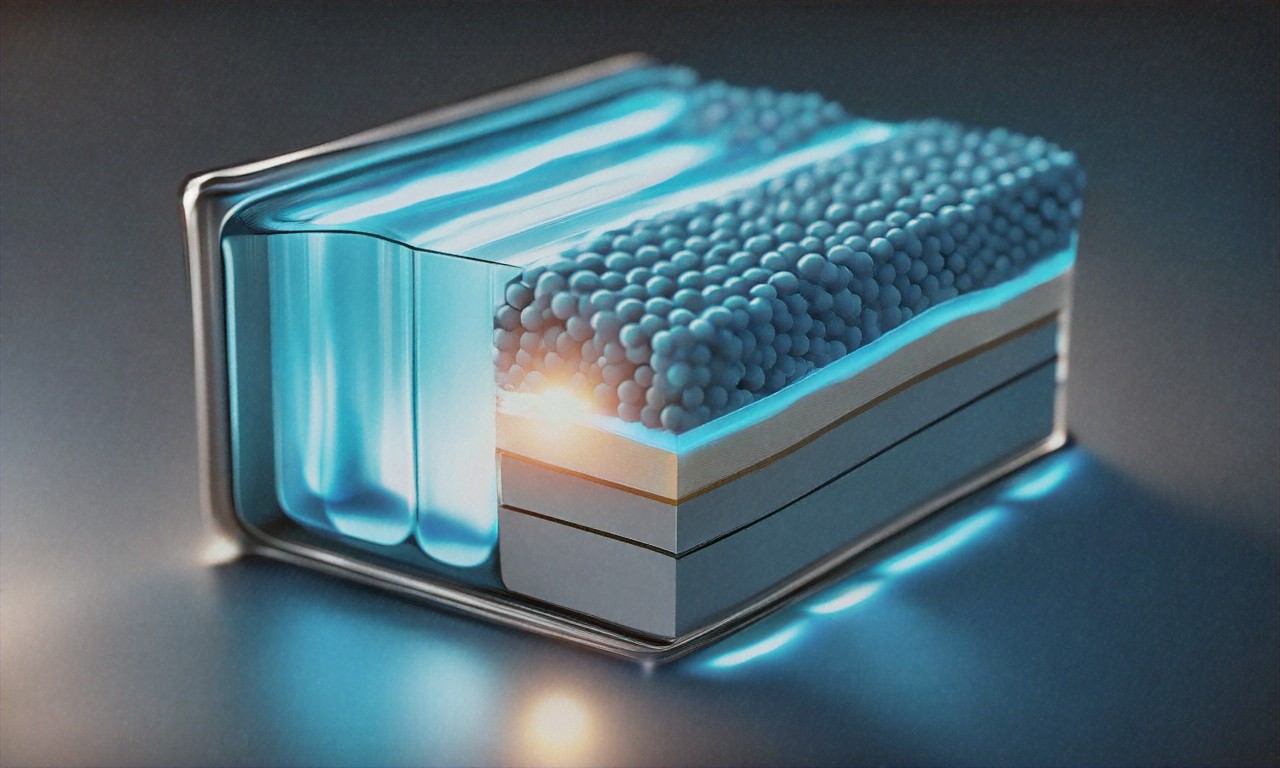
How silicon-carbon and solid-state batteries are set to reshape smartphone battery life and charging speed.
Lithium-ion cells in smartphones haven’t meaningfully changed their energy density since the chemistry first replaced nickel-metal hydride in the early 2000s. Processors have gotten thousands of times faster. Camera sensors rival dedicated mirrorless systems. Displays refresh at 120Hz across billions of colors. But the battery, the part that determines whether any of it’s usable past 3 PM, still runs on roughly the same electrochemical principles that powered an iPod in 2005. Every year, phones demand more power, and every year, battery chemistry inches forward while everything else sprints. It’s probably the single biggest mismatch in consumer electronics right now.
What’s filled the gap is a set of workarounds: bigger physical batteries crammed into slightly thicker chassis, faster chargers that trade longevity for convenience, and increasingly clever software that throttles performance to squeeze another hour out of a depleting cell. None of these solve the underlying problem. They mask it. And manufacturers know this, which is why billions of dollars are flowing into solid-state battery research from companies like Samsung SDI, Toyota, CATL, and QuantumScape. Whether that research arrives in phones before 2030 is another question.
To understand where things are heading, it helps to trace where they’ve been. Nickel-cadmium cells powered the earliest mobile phones, those brick-sized Motorola handsets from the early ’90s. NiCd batteries were heavy, toxic (cadmium is a dangerous heavy metal), and suffered from a well-known “memory effect” where partial charges gradually reduced total capacity. They offered maybe 500-800 mAh, which was fine when all a phone did was make calls. Nickel-metal hydride replaced them and improved on nearly every metric: better energy density, reduced memory effect, no cadmium. Phones like the Nokia 3310 ran on NiMH cells, and people remember those batteries lasting forever. They didn’t, really. The phone just drew almost nothing, monochrome screen, no data, no GPS. A low bar to clear.
Sony commercialized the first lithium-ion cells in 1991, and by the early 2000s they’d become standard. Higher voltage per cell (3.6-3.7V nominal versus 1.2V for NiMH), no memory effect, lighter weight, and around 150-200 Wh/kg of energy density: roughly double NiMH. Lithium-polymer refined the form factor rather than the chemistry, swapping rigid cylindrical cells for flexible pouch designs that could be shaped around internal components. That’s how Samsung fits a 5,000 mAh LiPo cell into the Galaxy S24 Ultra at just 8.6mm thick. Try fitting a cylindrical cell in there.
The Numbers Game, the Charging Arms Race, and What Fast Charging Actually Costs
Phone makers advertise capacity in milliampere-hours because bigger numbers sell. iPhone 15 Pro Max: 4,441 mAh. Galaxy S24 Ultra: 5,000 mAh. ASUS ROG Phone 8 Pro: 5,500 mAh. But mAh alone doesn’t describe stored energy because it ignores voltage. Watt-hours are the real measure; you get them by multiplying amp-hours by nominal voltage. So the Galaxy S24 Ultra’s 5,000 mAh cell at 3.87V holds about 19.35 Wh. Apple’s 4,441 mAh cell at 3.82V stores roughly 16.97 Wh. And the ROG Phone 8 Pro at 5,500 mAh and 3.87V delivers around 21.29 Wh. A 4,000 mAh battery at 3.87V actually stores more energy than a 4,200 mAh cell at 3.7V. Manufacturers aren’t lying, strictly speaking. They’re just choosing the metric that flatters them.
Degradation is the other piece that marketing doesn’t mention. Every lithium battery loses capacity with each full charge cycle, drain to zero, charge to full, repeat. After about 500 complete cycles, most Li-ion cells retain only around 80% of their original capacity. For a heavy user charging daily, that’s roughly 18 months. Two years in, a 5,000 mAh battery is performing like a 4,000 mAh one. By three years, maybe 3,500 mAh. A phone that used to last a full day now dies before dinner. Apple introduced Battery Health monitoring and an 80% charge limit option in iOS 17. Samsung added similar protections in One UI. These features work — they slow degradation by keeping the battery away from full charge. But the trade-off is that you’re deliberately using less capacity today so the battery degrades more slowly tomorrow. It’s a concession, not a fix.
Because capacity hasn’t scaled with demand, manufacturers pivoted to fast charging as a selling point. Can’t make it to evening? At least you can get to 50% in fifteen minutes. Xiaomi’s HyperCharge technology hit 300W in lab demonstrations, fully charging a 4,100 mAh cell in under five minutes. Their Xiaomi 14 ships with 120W wired charging. OPPO’s SuperVOOC has reached 240W in concept devices. OnePlus does 100W on flagships. Samsung, historically conservative here, pushed the Galaxy S24 Ultra to 45W, and rumors suggest the S25 series may reach 65W.
But fast charging generates heat, and heat destroys batteries. Pushing 100+ watts into a small LiPo cell creates real thermal stress. Dual-cell designs help, the OPPO Find X7 Ultra splits its 5,400 mAh capacity into two 2,700 mAh cells that charge in parallel, halving the per-cell current. Clever, but it adds complexity and cost. Independent testing from outlets like AccuBattery and GSMArena has shown that phones regularly charged at maximum wattage lose capacity faster than those charged at moderate speeds. Five-minute charges today might cost months of battery life down the road. Wireless charging compounds the problem. Qi wireless transfer loses roughly 25-40% of energy as heat. Place a phone on a 15W wireless charger and only about 9-11W reaches the battery. It’s slower, hotter, more wasteful, and harder on the cell. Qi2, borrowing Apple’s MagSafe magnetic alignment, improves positioning accuracy but doesn’t change the underlying efficiency problem. Convenient? Sure. Good for battery health? Not especially.
Software has become the stopgap while hardware catches up. Android’s Adaptive Battery uses machine learning to predict usage patterns and restrict background activity for apps you’re unlikely to open soon. iOS does something similar with Optimized Battery Charging, it learns your daily routine and delays charging past 80% until shortly before you typically unplug. Samsung’s One UI 6 offers three battery protection modes: Basic, Adaptive, and Maximum. Maximum caps charging at 80% and, according to Samsung, can extend battery lifespan by up to two years. Apple’s iOS 18 added user-selectable charge limits anywhere from 80% to 100%. These tools genuinely help. But they’re compensating for hardware limits rather than removing them: noise cancellation instead of quiet.
Silicon-Carbon Anodes, Solid-State Promises, and the Manufacturing Wall
Before solid-state enters the picture, there’s a bridge technology already shipping in phones: silicon-carbon anode batteries. Standard Li-ion cells use graphite anodes with a theoretical energy density ceiling of about 372 mAh per gram. Silicon can store up to 4,200 mAh per gram, more than ten times as much. The catch is that silicon expands by roughly 300% during charging as it absorbs lithium ions. That swelling cracks the anode material, and the battery falls apart within a few cycles. Engineers have spent years on this problem. The best current approach mixes silicon nanoparticles into a carbon matrix. Carbon absorbs most of the swelling while silicon contributes some of its density advantage.
OnePlus used silicon-carbon in the OnePlus 12, fitting 5,400 mAh into a chassis that’d normally hold 5,000 mAh with conventional chemistry. HONOR’s Magic6 Pro pushed to 5,600 mAh with its silicon-carbon cells. Samsung is reportedly adopting the technology for the Galaxy S25 Ultra, potentially reaching 5,500 mAh or higher without increasing thickness. Silicon-carbon cells also accept charge faster than pure graphite anodes because lithium ions can be absorbed more quickly. It amounts to maybe 10-15% more energy density and improved charge acceptance. Meaningful, but not the generational leap that changes daily charging habits. For that, the industry is looking at solid-state.
Solid-state batteries replace the liquid or gel electrolyte in conventional lithium cells with a solid material, typically ceramic, glass, or a sulfide compound. One change, but it touches almost every limitation of current batteries. Solid electrolytes enable lithium metal anodes, which have a theoretical capacity of 3,860 mAh/g (over ten times graphite). Combined with high-voltage cathodes, solid-state cells could reach 400-500 Wh/kg, roughly double to triple what Li-ion achieves today. In a phone, that means either two to three days of battery life in the same form factor, or current-day endurance in a dramatically thinner device.
Safety improves too. Liquid electrolytes are flammable, that’s why lithium-ion batteries occasionally catch fire. Samsung’s Galaxy Note 7 in 2016 remains the most visible example: a battery defect caused overheating, fires, and a global recall costing billions. Solid electrolytes don’t ignite. You could puncture a solid-state cell without it catching fire. That opens up placement options inside a phone that are currently off-limits for thermal safety reasons. Longevity is the third gain. Lab tests have demonstrated solid-state cells retaining over 90% capacity after 1,000 cycles, versus the roughly 80% after 500 cycles typical of Li-ion. A phone battery that’s still healthy after four or five years of daily use changes the replacement calculus entirely. And solid-state cells handle temperature extremes better — current Li-ion performs poorly below freezing (phones dying on ski trips) and degrades faster above 45°C. Toyota’s solid-state prototypes have operated stably from -30°C to 100°C. Consistent performance in a Minnesota winter or a Dubai summer.
So why isn’t every phone using them? Manufacturing. The interface between a solid electrolyte and the electrodes needs to be atomically precise. Liquid electrolytes conform naturally to every surface irregularity, maintaining ionic contact. Solids don’t. Any microscopic gap creates resistance and degrades performance. Achieving that precision consistently on a production line is a different problem than achieving it in a lab. Dendrite formation is another issue. During charging, lithium ions don’t always deposit evenly on the metal anode: they can form needle-like structures (dendrites) that grow through the electrolyte and short-circuit the cell. Solid electrolytes were supposed to physically block dendrites, but researchers have found that dendrites can crack through ceramics at high charging rates. Tougher electrolyte materials or surface engineering on the anode might solve this. Might not. Hard to say right now.
Cost sits on top of everything. Solid-state cells currently run about 8-10 times more per kilowatt-hour than conventional Li-ion. The raw materials aren’t necessarily pricier, but the manufacturing processes are, and existing Li-ion production lines can’t easily be retrofitted. Companies need entirely new factories. Multi-billion dollar investments that require confidence in both the technology and the market. Toyota has been the loudest, announcing solid-state batteries for EVs by 2027-2028 with a target of 1,000 km range and ten-minute charging. They hold over 1,000 related patents. QuantumScape, backed by Volkswagen, has demonstrated single-layer cells retaining over 80% capacity after 800 cycles, and they’re working on multi-layer production, the step separating lab results from commercial reality. Their CEO has said automotive applications come first, with consumer electronics maybe two to three years after.
Samsung SDI has announced pilot production of solid-state cells for 2027. Given Samsung’s vertical integration, they make the batteries and the phones) they’re probably the likeliest candidate to ship a solid-state phone battery first. A Galaxy S28 or S29 with a solid-state cell lasting three days would be a real hardware differentiator in a market where flagships are increasingly interchangeable. Chinese manufacturers are pushing hard on this too. CATL, the world’s largest battery maker, has demonstrated a semi-solid-state cell at 500 Wh/kg. NIO has already shipped a semi-solid-state battery pack in their ET7 sedan at 150 kWh capacity. Semi-solid designs use a gel-like electrolyte (partway between liquid and fully solid, as a stepping-stone approach. They solve the electrode contact problem by retaining a thin liquid or gel layer at the interfaces while using solid electrolyte for the bulk of ion transport. Maybe 60-70% of the energy density improvement of full solid-state, with much better manufacturability. Semi-solid is probably what shows up in phones before true solid-state does, possibly within two to three years in premium flagships.
Other chemistries are worth mentioning briefly. Lithium-sulfur offers a theoretical energy density of around 2,600 Wh/kg — five times current Li-ion. Sulfur is cheap and abundant. But Li-S cells suffer from rapid capacity fade as sulfur dissolves into the electrolyte during cycling. Researchers at Monash University and CSIRO have made progress with modified cathode structures, but commercial Li-S phone batteries are probably a decade out. Sodium-ion batteries have become serious contenders for grid storage and budget electronics, sodium is far cheaper and more abundant than lithium, and CATL has begun mass production. But energy density sits around 100-160 Wh/kg, too low for flagship phones. Budget tablets or IoT devices, maybe. Graphene-enhanced batteries get breathless headlines every few months. From what I’ve seen, graphene improves conductivity and surface area in existing designs, enabling faster charging and somewhat better longevity. It doesn’t change the energy density equation in any meaningful way. The Nura phone claimed graphene battery tech a few years back, and the actual specs weren’t dramatically different from standard Li-ion. Graphene’s an additive improvement, useful, but not a new chemistry.
There’s a sustainability dimension that doesn’t get enough attention. Smartphones are replaced every 2.5 years on average, and battery degradation is one of the top reasons. If solid-state batteries last five years or longer, replacement cycles stretch, which reduces electronic waste. Fewer batteries manufactured means less lithium mining, less cobalt extraction from ethically questionable sources in the DRC, and less energy consumed in production. The European Union’s new Battery Regulation, taking full effect in 2027, mandates that phone batteries retain at least 80% capacity after 500 cycles and that batteries must be user-replaceable. That regulatory pressure is accelerating timelines. Manufacturers delivering longer-lasting batteries gain a compliance advantage, and the financial incentive happens to align with the technical direction toward solid-state. Recycling matters too. Current lithium-ion recycling recovers maybe 50-60% of valuable materials. Solid-state batteries, with their more uniform construction and no liquid electrolyte, could be significantly easier to recycle. Redwood Materials, founded by former Tesla CTO JB Straubel, is already developing recycling processes for next-generation battery chemistries.
What seems realistic from here: silicon-carbon anodes becoming standard across all price tiers, not just $1,000 flagships. The manufacturing premium is shrinking, and there’s no good reason a $400 mid-ranger in 2027 shouldn’t have one. The charging wattage arms race could probably cool off: 60-80W charging that doesn’t wreck the battery, paired with cells large enough that fast charging is rarely needed, would be a better outcome than 300W. Semi-solid-state in at least one mainstream flagship by 2028 seems plausible. If Samsung SDI or CATL can deliver even 300 Wh/kg in a phone-sized pouch cell, that’s 7,000-8,000 mAh equivalent without making phones thicker. Full solid-state by 2030, a phone battery lasting three days, charging in twenty minutes, retaining 90% capacity after three years, and not catching fire, isn’t fantasy. It’s where the research points. The investment money says so. The patent filings say so.
But I honestly don’t know where this goes from here. Whether phones get there before cars, whether semi-solid turns out to be good enough that full solid-state never reaches handhelds, whether some entirely different chemistry blindsides all of this; it could go several ways. Maybe Samsung ships a solid-state Galaxy in 2029 and changes the industry overnight. Maybe the manufacturing problems prove harder than anyone expected and we’re still talking about silicon-carbon anodes in 2032. The science works in the lab. Whether it works on a production line at the volumes the phone industry demands, at a price consumers will pay; that’s a different question, and right now, nobody has a definitive answer.

(0) Comments