
Elon Musk says humans on Mars by 2030. I asked an engineer who actually builds components for the Starship program what she thought of that timeline. She paused for about five seconds, which, if you know engineers, is the polite version of laughing in your face. The hardware is further along than most people realize. But between a successful rocket test and a surviving human colony, there’s a gap measured in biology, radiation shielding, toxic soil chemistry, and about ten problems nobody has cracked yet.
I spent about three weeks going around to labs, testing facilities, and mission planning centers. Talked to a lot of people. What came back was a weird mix of real progress and brutal honesty. We’re closer to Mars than we’ve ever been. But “closer” and “close” aren’t the same word for a reason. Between a successful rocket test and an actual human colony, there’s a canyon, and it’s measured in biology, psychology, money, and political attention spans as much as kilometers.
I figured the best way to lay this out is to walk through the timeline, roughly, from where things stand right now to where they’d need to be. So that’s what I’ll do.
Right Now: Starship and the Rocket Situation
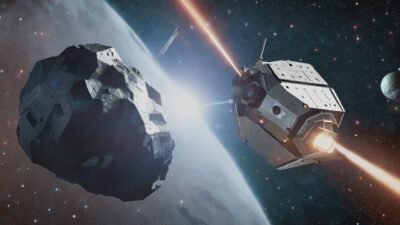
SpaceX’s Starship is the biggest launch vehicle anyone’s ever built. Nearly 120 meters tall when you stack it on the Super Heavy booster. Dwarfs the Saturn V. Thirty-three Raptor engines on the first stage pump out around 74 meganewtons of thrust at liftoff, which is roughly double what Saturn V could do. And unlike every large rocket before it, both stages are supposed to come back, land, get refueled, and fly again. Full reusability. That’s the pitch, anyway.
The early test flights were, let’s say, eventful. April 2023: fireball over the Gulf of Mexico. November 2023, got further, but the ship was lost during coast phase. By the third and fourth attempts, things started working. Booster did a controlled return. Ship hit its intended path. SpaceX showed off the kind of build-test-crash-fix cycle they’re known for. Good stuff. But getting an empty rocket to orbit and getting a crewed ship to Mars are, I think most people would agree, pretty different problems.
Here’s what doesn’t make it into the press conferences as often. Starship can’t carry enough fuel to reach Mars on its own. Not even close. The plan requires orbital refueling, launch one Starship, park it in orbit, then send up a bunch of tanker flights to fill the tanks before it leaves for Mars. How many tanker flights? Estimates I’ve seen range from six to twelve per Mars-bound ship. So for one crewed mission, you’re looking at launching and docking a dozen or more Starships in quick succession. That kind of launch pace doesn’t exist yet. The infrastructure for it doesn’t exist yet either.
“People hear ‘reusable rocket’ and think it’s like refueling a plane at the gate,” one propulsion engineer told me at a conference in Houston. “It’s more like rebuilding half the plane between every flight, except the plane is also a gas station in space.” She wasn’t being dismissive. Just accurate. Transferring cryogenic propellants between two vehicles in microgravity, at this scale, nobody’s done it. NASA gave SpaceX a contract to demonstrate the concept. As of now, it’s still unproven.
2022-2025: Artemis and the Slow Return to the Moon
While SpaceX gets the headlines, NASA’s Artemis program has been taking the institutional route. Slower. More committees. Artemis I flew an uncrewed Orion capsule around the Moon in late 2022, and it went mostly fine. Artemis II, the one that’ll carry astronauts on a lunar flyby, has been pushed back several times. Artemis III, supposed to land humans on the Moon for the first time since 1972, depends on a modified Starship as the lunar lander. So NASA’s schedule is now partly chained to SpaceX’s development speed. Kind of an odd arrangement.
Why does the Moon stuff matter for Mars? Because Artemis is supposed to be the practice run. Learn to live and work on the Moon before attempting the much harder Mars trip. The Lunar Gateway, a small station that’d orbit the Moon, would serve as a staging area and a place to test deep-space living technology. Problem is, Gateway’s been scaled back over and over due to budget pressure. Some modules won’t show up until the 2030s. If the Moon is our dress rehearsal for Mars, we haven’t finished building the theater.
I talked to a former Artemis program manager, now consulting privately. He didn’t sugarcoat it. “The architecture is sound on paper. But paper doesn’t have budget cycles, election years, or contractor delays. Every president since George H.W. Bush has announced a Mars initiative. None of them have funded one.” He brought up the Space Launch System, NASA’s own heavy-lift rocket, which runs about $2 billion per launch and can’t be reused. “You can’t build a Mars program on a rocket that costs more than some countries’ entire space budgets. SLS is a magnificent engineering achievement and a fiscal dead end.”
The Transit Problem: Seven Months of Cosmic Rays
Alright, say we solve the rocket part. Say we get a crew off Earth and pointed at Mars. Now you’ve got a different problem. Outside Earth’s magnetic field, your body is getting hit by two types of radiation. Solar particle events, storms of protons blasted out by the Sun) can be shielded against with a few centimeters of material. Not great, but manageable. Then there are galactic cosmic rays. High-energy particles from deep space, a lot of them heavy ions like iron nuclei moving at nearly the speed of light. You can’t really shield against those. Not with any practical amount of material you can launch.
And here’s the part that probably keeps radiation biologists up at night. When a heavy ion slams into the aluminum wall of your spacecraft, it doesn’t just stop. It shatters into a spray of secondary particles (neutrons, protons, lighter ions, that scatter through the cabin. Some shielding materials actually make things worse by creating more secondaries than the original particle would’ve caused on its own. People at NASA’s Space Radiation Laboratory at Brookhaven have been studying this for decades, firing beams at biological samples to simulate what deep space does to living tissue.
The numbers aren’t great. A round trip to Mars, seven months each way plus surface time, would expose astronauts to roughly 1.2 sieverts of radiation. NASA’s career limit sits at 600 millisieverts. One Mars mission would blow past that by double. And cancer risk isn’t even the whole story. Recent studies on mice exposed to simulated cosmic radiation showed real cognitive decline. Impaired memory. Trouble telling familiar objects from new ones. Increased anxiety-like behavior. The particles punch through neurons directly, and then the brain’s own inflammatory response piles on more damage.
“We’re not talking about a sunburn,” a radiation biologist at Johnson Space Center told me, pulling up images of damaged neural tissue on her screen. “We’re talking about microscopic holes punched through your brain cells by particles moving at 90% the speed of light. And we don’t have a fix. We’ve got ideas, pharmaceutical countermeasures, extra shielding around sleeping quarters) but nothing proven for a mission this long.”
Water has been proposed as shielding, since hydrogen-rich materials absorb cosmic rays better without producing as many secondaries. Sounds reasonable until you do the math on mass. Wrapping a crew habitat in enough water to matter would add tens of thousands of kilograms, which means more fuel, more tanker flights, a bigger vehicle. Everything cascades. Others have floated superconducting magnets that’d create an artificial magnetic field around the ship, sort of mimicking Earth’s magnetosphere. Pretty idea. Also maybe decades from working in practice.
Years One Through Three on Mars: Keeping People Alive
On the International Space Station, supply ships show up every few weeks. Fresh food. New equipment. Spare parts. On Mars, the transfer window between Earth and Mars opens once every 26 months. Even then, a supply ship takes seven months to get there. If something breaks or runs out between windows, that’s it. You deal with what you’ve got. A Mars colony has to either be self-sufficient or carry enough supplies to last years. Neither option exists today. Not even close, from what I can tell.
Growing food on Mars is, to put it flatly, a cascading series of headaches. The soil (regolith, technically, has those perchlorates in it. Toxic. You’d need to wash or chemically treat the regolith before growing anything, which takes water, which is itself a limited resource. Sure, there’s water ice at the poles and possibly underground at lower latitudes. Extracting it requires drilling equipment, processing plants, and a lot of energy. Mars gets about 43% of the sunlight Earth does. Solar-powered greenhouses would grow far less food per square meter than the same setup on Earth.
I went to a bioregenerative life support lab at Kennedy Space Center. Researchers had a sealed chamber about the size of a shipping container. Inside: lettuce, radishes, wheat growing under LED lights. Water recycled through condensation capture and filtration. Organic waste processed back into growing material. It was cool to see. It was also barely feeding a simulated crew of four, and the system needed constant babysitting.
“We can grow salad,” the lead researcher said, kind of smiling. “That’s genuinely not nothing. Fresh greens give you vitamins, fiber, and a big psychological boost. But we’re a long way from growing enough calories to keep a crew going. You still need pre-packaged food for most of your nutrition.” She walked me through their calorie math. A crew of six on a three-year mission would need roughly 24,000 pounds of food if they grew nothing. Even optimistic crop yields only offset about 20-30% of that.
Water recycling is further along, thanks to decades of work on the ISS. The station’s Water Recovery System reclaims about 90% of all water, including from urine and humidity. But 90% isn’t enough for Mars. Over three years, a 10% loss rate means you need either a huge water reserve or a reliable way to mine and purify Martian ice. And the recycling hardware itself breaks down, on the ISS, it’s one of the most maintenance-heavy systems aboard.
The Part Nobody Wants to Talk About: Psychology
Rockets get attention. Radiation gets some attention. The human mind? Not so much. But I think it might be the hardest problem of all, and it’s the one with the least obvious engineering solution.
Picture the mission. Seven months in a space roughly the size of a large RV. You arrive at a barren, silent, rust-colored world. Spend a year or more there. Then seven months back. Total time: around three years. Talking to Earth involves a delay of 4 to 24 minutes each way, depending on where the planets are. No real-time phone calls. No video chats with your family. Every message crawls across millions of miles at light speed and still takes minutes to arrive.
Studies from analog environments, Antarctic stations, submarines, isolation experiments, show the same patterns over long durations. Depression. Interpersonal conflict. Sleep problems. Cognitive fog. The Mars-500 experiment locked six volunteers in a simulated spacecraft for 520 days. Researchers documented mood swings, social withdrawal, and messed-up sleep cycles in several of them. And those people knew they could leave in an emergency. They knew they were on Earth the whole time. A Mars crew wouldn’t have that safety net.
“You can’t simulate the reality of being 200 million kilometers from home,” a psychologist working with NASA’s Behavioral Health and Performance group told me. “You can simulate the boredom, the confinement, the bad food. You can’t simulate looking out the window and seeing Earth as a pale blue dot that fits behind your thumbnail. We don’t fully know what that does to people. Nobody’s ever experienced it.”
Crew selection and training will matter a lot, but there’s an uncertainty here that preparation can’t fully cover. Humans evolved in environments with seasons, weather, varied terrain, social groups, random encounters. Mars has none of that. The things that keep people sane, family connections, nature, spontaneous interaction) just won’t be there. Every conversation will be scripted or delayed. Every walk outside means a spacesuit. Every sunrise looks the same: thin, blue-tinged glow on a dusty horizon.
Landing Day: Getting 100 Tons to the Surface
Mars has an atmosphere. Barely. About 1% as thick as Earth’s. Too thin to slow a heavy spacecraft with parachutes alone. Thick enough to generate enormous heat during entry. Every Mars lander so far has dealt with this differently, and every one has been small. Curiosity rover, about 900 kilograms, used that wild sky crane system. Perseverance used something similar. A crewed Starship would mass over 100 metric tons. Landing something that heavy on Mars? Unsolved.
SpaceX’s approach: use the thin Martian atmosphere for initial braking, then fire Raptor engines for a powered landing. Works fine on Earth — they’ve shown it in multiple test flights. Mars is different, though. Thinner air means higher speeds at lower altitudes. The lower gravity helps a bit, but the dust is a real concern. Nobody really knows what happens when you blast six methane-oxygen engines at close range into Martian regolith. Simulations suggest you might dig a crater right under your own landing pad, which could destabilize the vehicle. You’d also throw up a dust cloud that could damage nearby equipment or, if you’re landing near an existing base, sandblast everything within a hundred meters.
“We tested analogs in the Nevada desert,” a propulsion specialist at JPL told me. “Firing engines into loose, dry soil at high thrust. The results were.. educational. The ground deforms fast and unpredictably. You’d need some kind of prepared landing surface, which means you need to send construction equipment ahead of the crew. Which means more missions, more cost, more complexity.” Every solution needs a prior solution that doesn’t exist yet. Turtles all the way down.
2030s and Beyond: When Does This Actually Happen?
I asked every expert I talked to. When will humans actually stand on Mars? Answers ranged a lot. “2040 if everything goes perfectly.” “2060 would be realistic.” One veteran astronaut just said, “Not in my lifetime, and I’m fifty-three.” Nobody (not a single person working directly on the technology, gave me a date before 2038. Most added conditions: sustained political commitment, funding at two to three times current levels, and breakthroughs in life support and radiation protection that haven’t happened yet.
The most optimistic scenario, if you line everything up, looks roughly like this. SpaceX shows orbital refueling works by 2026-2027. Starship starts hauling cargo to orbit regularly by 2028. An uncrewed Starship lands on Mars during the 2030 or 2033 transfer window, proving the landing system works at full scale. Artemis, in the meantime, builds up a sustained Moon presence, testing habitats, life support, and ways to use local resources. Assuming all of that works, and assuming Congress puts up the roughly $100 billion this’d cost over two decades, a crewed Mars mission could, in theory, launch in the late 2030s.
But that’s the rosy version. History suggests it’ll slip. The ISS was supposed to be up and running by 1994; it wasn’t permanently crewed until 2000. The James Webb Space Telescope was planned for a 2007 launch; it flew in 2021. SLS was supposed to go in 2017; it went in 2022. Big space programs almost always take longer and cost more than anyone projects. There’s no strong reason to believe Mars will break that pattern.
And there’s something that gets blurred in all the hype: a Mars mission isn’t a Mars colony. Even if humans land on Mars in the 2030s or 2040s, they’d probably stay a few weeks. Collect samples. Plant a flag. Come home. A permanent settlement, the kind Musk talks about, with thousands of people living and working there) would take decades more. Self-sustaining farms. Reliable power, probably nuclear. Manufacturing capability. Medical facilities that can handle emergencies without Earth’s help. You’re talking about building a small city on a planet that’s actively trying to kill everyone in it.
The People Doing the Actual Work
After three weeks of visiting places and talking to people, I didn’t come away feeling hopeful or gloomy. Mostly just.. informed, I guess. The engineers working on this are sharp. They’re dedicated. They don’t need anyone hyping their work because they’ve got data, and data is what moves things forward.
What stuck with me was the quiet determination. These aren’t dreamers chasing a fantasy. They’re grinding through problems, one at a time, knowing full well some of those problems will take a generation to solve. A radiation biologist in Houston testing pharmaceutical compounds that might protect brain cells from cosmic ray damage. A botanist at Kennedy breeding wheat that grows faster under low light. A materials scientist at Marshall working on new composite structures for pressure vessels. Not one of them expects to see a Mars colony during their career. All of them believe they’re building toward one.
“People ask me if we’ll make it to Mars,” an Artemis systems engineer said as we walked through a clean room where lunar lander parts were being put together. “The answer is yes. The question isn’t whether: it’s whether we’ll do it wisely. Rush it, and you get dead astronauts and a canceled program. Take the time to do it right, and you get something that lasts.” She paused, looked at the hardware around us. “I’d rather be slow and alive than fast and famous.”
Mars has been sitting there for four and a half billion years. It can probably wait a few more decades while we figure out how to not die getting there. And when we do go (it’ll happen, I’m fairly sure of that, it won’t be because of a billionaire’s timeline. It’ll be because thousands of people in labs and factories and control rooms did the unglamorous, spreadsheet-heavy, peer-reviewed work of solving problems that don’t fit in a headline.
So yeah, I was looking at those timelines the other day. The official ones still say 2030. The people I talked to, the ones actually doing the work, seem to think we’re looking at something more like 2040 at the earliest, and probably later. Could be wrong, maybe something changes, some breakthrough nobody saw coming. But right now, the gap between the press release and the lab bench is wide. And if I had to pick who to believe, I’d go with the ones running the numbers.

(0) Comments