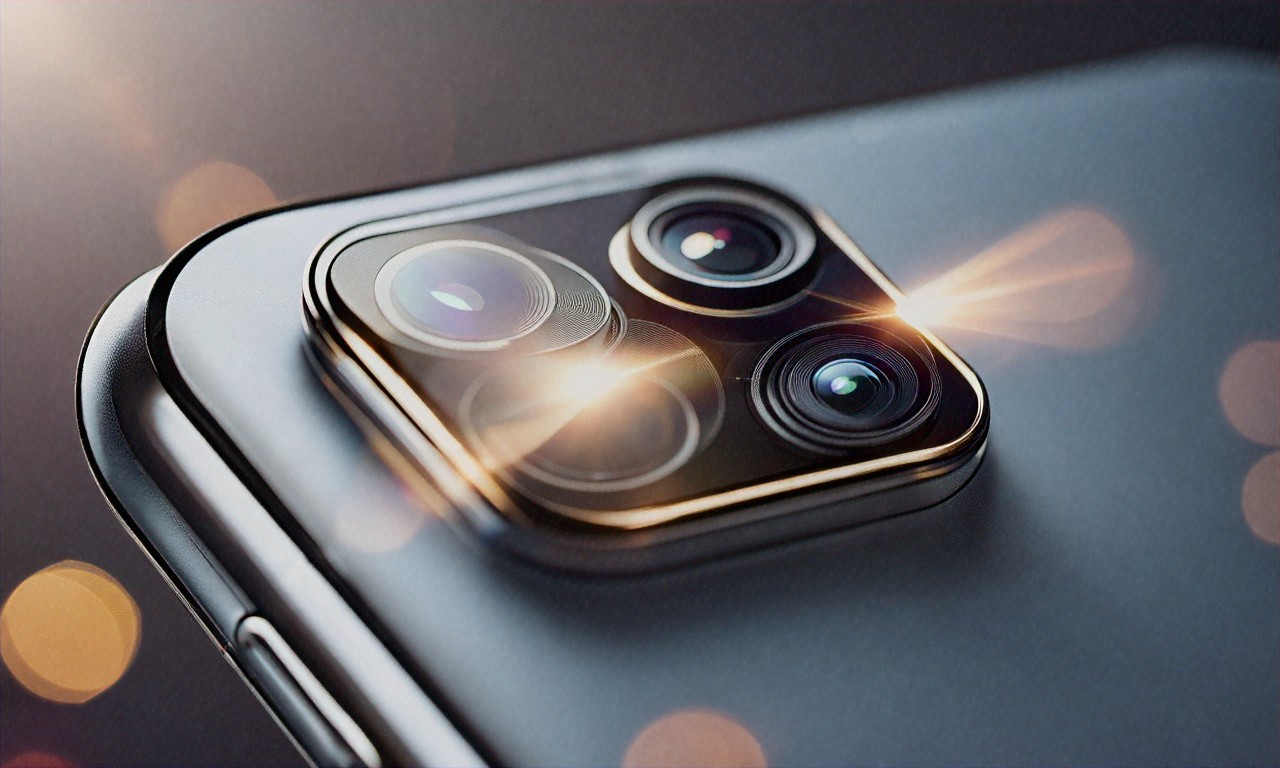
Explore how computational photography and AI are transforming smartphone cameras beyond what hardware alone can achieve.
the camera in your phone barely uses the camera anymore
Pull up a night photo you took on a phone five or six years ago, then put it next to one from a recent flagship shot in the same kind of light. The gap is almost embarrassing. Older shot: muddy, noisy, colors washed toward grey. Newer one: clean, punchy, detail in the shadows that physically should not be there given how little light hit the sensor. And here’s the part that surprised me when I first really sat with it. Sensors barely changed. A modern phone sensor is a touch bigger than the one from 2020, sure, but nothing like enough to explain the difference. What changed was the software.
That’s the whole story of smartphone cameras over the last decade, more or less. The physical camera stopped being the main event. Processing took over. When you tap the shutter now you’re not really taking a picture so much as triggering a pipeline, a stack of algorithms that fire in the instant around the press, some before it, most after. Photographers have a slightly grumpy name for it. Computational photography. And it has quietly rewritten what a tiny lens behind a sheet of glass is capable of.
So let me walk through how we got here, because the history actually explains the present better than any spec sheet does.
the idea is older than the phones
Computational photography didn’t start with phones at all. Researchers at places like Stanford and MIT were kicking the term around in the early 2000s, well before anyone had a device that could run the ideas. The pitch back then: instead of treating a photo as one fixed exposure that software cleans up afterward, build the software into the act of capture itself. Let algorithms make the calls about exposure and focus and color in the moment, or even merge several frames into one. Not a filter slapped on at the end. Something woven through the whole process.
For a long stretch it stayed academic. Cool papers, neat demos, nothing you could hold. Phones of that era were still scrapping to fit a usable two-megapixel sensor into something pocketable, and the math these researchers were describing needed processing muscle that mobile chips simply didn’t have yet. So the ideas sat on a shelf. The groundwork was real, though, multi-frame capture, depth estimation from a single lens, algorithmic tone mapping. All of it was waiting for the hardware to show up.
It took about a decade.
2016, and the phone that shouldn’t have won
If you want a single moment where this went from theory to something ordinary people noticed, October 2016 is a strong pick. Google shipped the first Pixel. One rear camera. A sensor that, on paper, was nothing to write home about. And it kept producing photos that matched or beat the dual-lens flagships Samsung and Apple were selling.
The trick was a feature Google called HDR+. Grab a burst of deliberately underexposed frames, merge them, and you get one image that holds detail from deep shadow up to bright highlight with barely any noise. People could see the result with their own eyes, which mattered more than any explanation. A lot of reviewers were baffled. Forums argued about it for months. Some folks flatly refused to accept that a single-camera phone could hang with dual-lens rigs. Photos kept winning the argument anyway.
Apple landed Portrait Mode on the iPhone 7 Plus the same year, using two cameras to guess depth and blur the background. Rough by today’s standards, honestly, crunchy hair edges, blur that looked a bit like plastic, depth that got confused at middle distances. But it planted a flag. People started wanting their phone to interpret a scene, not just record whatever was sitting in front of the lens.
night mode, and the moment it clicked for everyone
Night photography is where computational photography stopped being a tech-reviewer talking point and became something your relatives noticed. Google’s Night Sight on the Pixel 3, late 2018, was the one that did it for a lot of people. Picture a dim restaurant, the kind of low, warm light where any phone camera of the day should hand you a blurry, grainy disappointment and an apology. The phone asks you to hold still. Two seconds, maybe three. And what comes out the other side looks like you’d hauled in a tripod and run a proper long exposure on a real camera, which you absolutely had not.
Apple followed with Night mode on the iPhone 11 in 2019. Samsung shipped its own take. Each company tuned things a little differently, but the bones were the same: capture a pile of frames, line them up with sub-pixel precision, merge them, then apply smart noise reduction and tone mapping on top. Within a year night mode went from “wait, is that real?” to a feature people just assumed any decent phone had. That seems to be the pattern with this stuff, by the way. Astonishment, then expectation, then total invisibility. Nobody’s impressed by it anymore. It just works, and that’s sort of the point.
the processing arms race
By 2020 every serious phone maker was throwing real money at computational imaging, and they all branded their pipelines. Apple built what it later called the Photonic Engine. Google leaned into Real Tone, which was a genuinely overdue effort to get skin tones right for people of color, and added group-shot tools like Best Take. Samsung had its ProVisual Engine. Xiaomi went and partnered with Leica on color science. The names are marketing, yeah, but underneath them sat real and different philosophies about how a phone should turn light into a picture.
Multi-frame processing became the foundation under almost all of it. Tap the shutter on a modern flagship and you’re not capturing one frame. You’re firing off a rapid burst, often somewhere between nine and thirty frames at slightly different settings, which the image processor then aligns and composites into a single shot. The reason it bothers is simple physics dressed up as cleverness. Pulling information from many frames lets a tiny sensor do things one exposure never could. Noise drops without smearing detail. Highlights that would’ve blown out and shadows that would’ve crushed both come back, and the range between the brightest and darkest bits the phone can hold starts creeping toward what you’d expect from a camera many times the size.
Super-resolution matured around the same time. Those eye-watering megapixel counts on Samsung’s high-res sensors, the 100MP and 200MP numbers, don’t actually deliver that much real detail in one frame. They use pixel binning, grouping several pixels into one bigger effective pixel for better light sensitivity. Then, when you zoom, the camera captures multiple frames and exploits the tiny tremor in your hand to reconstruct detail past the native resolution. Sounds backwards. Math holds up, though. Your shaky grip turns into a feature.
portrait mode actually grew up
Remember those crunchy 2016 portraits? Computational bokeh got genuinely convincing over the next few years, and a couple of things drove it. Depth sensing improved a lot once phones started carrying LiDAR (on iPhones) and time-of-flight sensors (on a lot of Android flagships). With an actual 3D map of the scene, the software finally knew which pixels were near, which were far, and which sat in between. The old guessing game around the edge of someone’s hair got a lot better. Not perfect. Better.
The blur itself got smarter too. Modern phones don’t just throw a gaussian blur at the background and call it done. They try to mimic how a real lens behaves, the shape of out-of-focus highlights, the gradual slide from sharp to soft, even small optical quirks like the colored fringing you get on certain lenses. That last one sounds like a flaw you’d want to remove. Turns out adding a little controlled imperfection is exactly what makes the fake bokeh read as real. Funny how that works. You spend years engineering flaws out, then engineer some back in because our eyes expect them.
Google’s approach on its Pro Pixels is worth a mention because it stopped treating depth as a simple on-off mask. Instead of “foreground sharp, background blurry,” it estimates a distance for basically every pixel and blurs each according to how far it sits, the way a real lens does, near things crisp, mid things softening, far things gone to a wash. Portraits picked up a three-dimensional feel the early stuff completely lacked. And then they got the same idea running in video. In real time. Which, if you stop and think about what that involves, is a genuinely absurd amount of math being done in the gap between one frame and the next.
where things sit now
Roll all that forward and a few things stand out about current phones.
Night mode mostly disappeared, in the sense that you no longer summon it. The better phones just engage their low-light processing automatically when the light drops, and the “hold still” prompt has largely gone away because stabilization plus frame alignment can soak up a fair bit of hand movement. You stop thinking about it. Point the phone at a dark scene and it deals with the dark, no ceremony.
Video is where a lot of the recent gains landed. For a long time computational tricks were a stills thing, because doing them thirty or sixty times a second was too expensive. That’s changed. High-end phones now apply tone mapping, noise reduction, and stabilization to video frame by frame in real time, and the results in tricky light, a backlit sunset, say, hold detail in both the bright sky and the dark foreground in a way that used to demand filters or heavy editing. Audio’s quietly improved alongside it, with on-device processing that can lift a speaker’s voice out of background noise after the fact. Two of the sleeper features, if you ask me, precisely because nobody markets them hard.
One honest caveat on all the model-specific bragging you’ll read. Take the precise marketing numbers with a fistful of salt, because every maker quotes figures gathered in exactly the conditions that flatter its own pipeline and nobody else’s. The broad direction? Real, and easy enough to see with your own eyes. Those exact percentages aren’t worth memorizing.
zoom is still the stubborn one
Optical zoom remains the hardest nut. Physics is unkind here, there’s only so much magnification you can wring out of a lens system a few millimeters thick. Periscope designs, which fold the light path sideways inside the phone body, pushed optical zoom out to 5x and even 10x on some models. Past that, you historically fell off a cliff into ugly digital crops.
Computational photography softened that cliff without flattening it. Phones now blend optical zoom with multi-frame super-resolution and AI upscaling to produce reach that would’ve been a pixelated joke a few years back. At extreme magnification the results are fine for a phone screen or social media and fall apart the second you pixel-peep, which is about what you’d expect. Some systems get clever and pull data from several rear cameras at once, the ultrawide for edge sharpness, the main for resolution, the telephoto for actual reach, and fuse the streams. Dedicated glass still wins a head-to-head against a proper long lens. It’s not close, really. But the gap is far narrower than anything that fits in your jeans has a right to manage.
the uncomfortable question
Here’s where I slow down. The object-removal tools, Google’s Magic Eraser, Apple’s Clean Up, Samsung’s eraser, can pull an unwanted person or pole out of a photo with a tap, and generative AI fills the hole with invented pixels. They’ve gotten unsettlingly good. You can erase a stranger from a vacation shot and, even zoomed way in, struggle to find the seam. Texture, shadow, the little color shifts, all reconstructed out of nothing.
So if an algorithm is generating pixels that were never in the scene, is the result still a photograph? I don’t have a clean answer. Major news organizations have drawn a line, the Associated Press and Reuters both moved to bar generative fill from news imagery, and some photo competitions now run separate categories for computationally altered work. A few photographers go the other way and shoot film, or switch computation off entirely, specifically to keep their work on the far side of that line.
Part of me thinks the panic is overcooked. Photography has always involved manipulation. Ansel Adams spent hours dodging and burning prints in a darkroom, and every JPEG your phone has ever produced was shaped by algorithms making calls about sharpening and color. Computational photography extends that lineage more than it breaks it. But another part of me knows that conjuring brand-new pixel data isn’t quite the same as nudging what was already captured, and that the difference matters a lot more in a courtroom or a newsroom than it does on someone’s holiday album. Could be wrong about exactly where the line belongs. I suspect we’ll be arguing about it for a decade.
hardware isn’t dead, it just isn’t king
I don’t want to oversell the software. A bigger sensor with larger pixels will always gather more light, and no amount of clever code conjures photons that never arrived. In genuinely brutal low light, the phones with physically larger sensors still pull ahead, and they should. The photon-noise floor is real, and software can’t dig below it.
But that floor keeps dropping. In good light, a solid mid-range phone with strong processing will produce photos that are tough to tell apart from a pricier flagship with a bigger sensor and weaker software. The sensor gap mostly reveals itself in the hard cases now, deep shadow, extreme zoom, fast motion in low light. For the photos most people actually take, kids at the park, food on a table, a group squeezed into one frame, processing has become the great equalizer. Which is genuinely good news if you don’t fancy spending flagship money.
so what should you actually do with this
If you’re picking a phone for the camera, a few things are worth more than the spec sheet.
Ignore the megapixel number. A 200MP sensor does not take better photos than a 50MP one, and often it’s the reverse once you account for how the two get processed. What matters is the processing pipeline, the image signal processor and the neural engine doing the work you never see.
Test the camera where you actually shoot, not in a showroom. Take it somewhere dim. Photograph a moving pet. Try the zoom on a flat, overcast afternoon. That’s where the differences between phones surface. A camera that dazzles in perfect light can wobble the moment conditions get messy, and occasionally the reverse is true, so trust your own eyes over a benchmark someone else ran.
If video matters to you, weigh it separately. Some phones nail stills and stumble on video, or the other way round. Stabilization, in particular, varies a lot between makers, and it’s the kind of thing you only miss once you’ve shot something handheld and watched it come out smooth.
where it’s heading
The thread running through all of this is the same one those researchers spotted in the early 2000s: the smartphone camera keeps getting better mostly through software, not glass. Machine learning research, better algorithms, smarter on-device chips. That’s where the gains have come from, and there’s no obvious sign of it slowing.
Will the phones we carry in 2030 make today’s cameras look quaint? Almost certainly. Does always-on, predictive capture, your phone quietly grabbing the shot a half-second before you decided you wanted it, become normal, or do the privacy questions keep it cornered? Genuinely hard to say, and those privacy questions are not small. Could some approach nobody’s betting on right now reshuffle the whole thing? Maybe.
The older night shot that once looked impressive already looks dated, and it didn’t take a new sensor to get here. It took code. We’ll see what the code does next.

(0) Comments