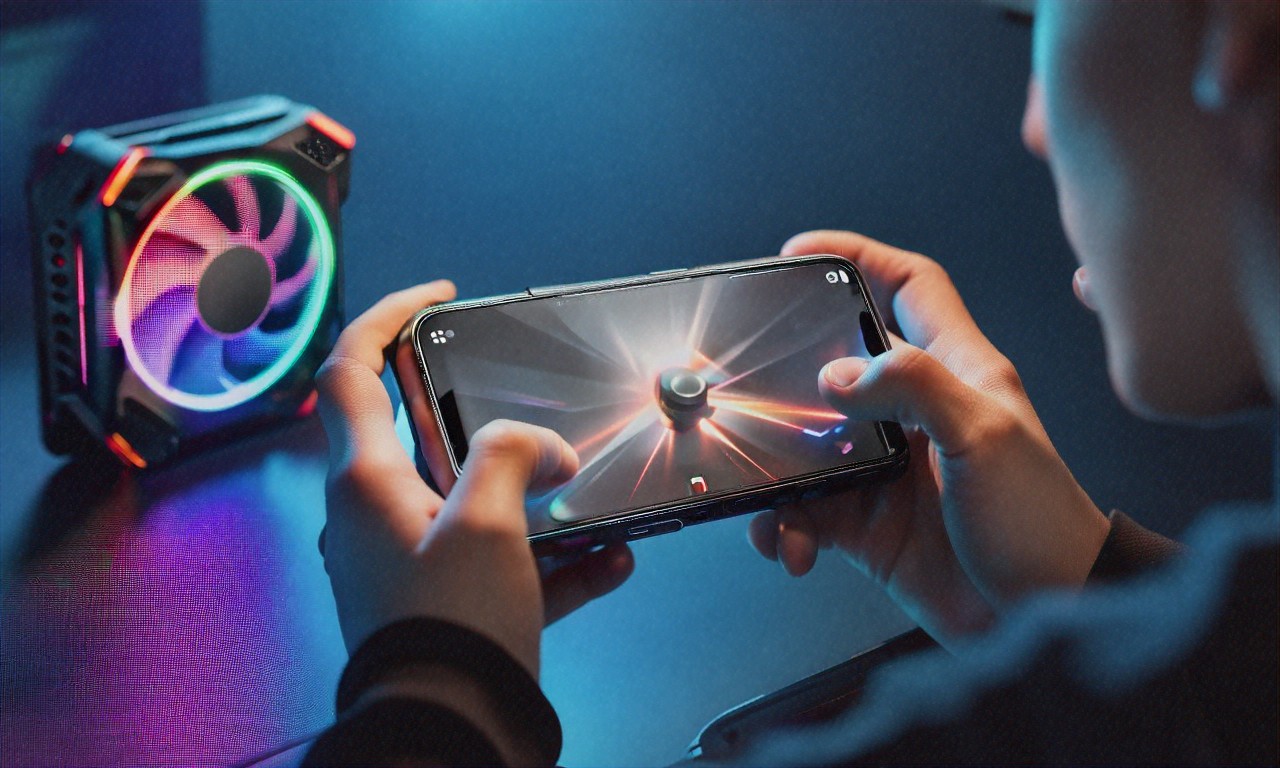
Most advice about gaming phones is wrong. Every tech reviewer either tells you they’re an absolute must-have or dismisses them as overpriced toys with RGB lights. Neither take holds up once you’ve actually spent real time with one. I know because I spent three months going back and forth between dedicated gaming phones and regular flagships, tracking frame rates, watching thermals, timing battery drain, and my opinion kept shifting under me like sand. I’m still not totally sure where I’ve landed, to be honest, and I think that uncertainty might be the most useful thing I can share with you.
Let me back up. For years, I was the guy in my friend group who’d roll his eyes whenever someone brought up gaming phones. Why would you drop $800-plus on a phone built around mobile games when a Samsung Galaxy S26 Ultra already runs everything without choking? That was my whole argument. Airtight, I thought. Then a friend handed me an ASUS ROG Phone 9 during a Genshin Impact session and, look, I didn’t have some dramatic conversion moment. But something felt different. Smoother. More responsive under my thumbs. And I got annoyed, because my neat little argument started cracking.
So I did what any self-respecting skeptic does when their worldview wobbles. I tested it properly. Over three months, I ran the ASUS ROG Phone 9 Pro, the RedMagic 10 Pro, a Samsung Galaxy S26 Ultra, and an iPhone 17 Pro through a gauntlet of games: Genshin Impact, Honkai: Star Rail, Call of Duty Mobile, PUBG Mobile, Diablo Immortal. I measured everything I could think of. And what I found was messier than any YouTube review would have you believe: which is probably why you won’t see this kind of nuance in a five-minute video.
What Makes a Gaming Phone a “Gaming Phone”?
Here’s what’s weird about gaming phones in 2026. Every flagship runs some version of the Snapdragon 8 Elite Gen 2 or the Dimensity 10000. Raw chip power? It’s converged. Top-end phones all have roughly the same silicon muscle, give or take. So if it’s not the processor, what exactly are you paying for when you buy a phone with “gaming” in the marketing?
Three things, mainly. Cooling systems. Display tech. Physical controls.
Take cooling. The ROG Phone 9 Pro has a vapor chamber that’s about 40% larger than what Samsung stuffs inside the S26 Ultra. Sounds like a minor spec difference until you’re 45 minutes into a Genshin session and your regular phone starts quietly dialing back its processor because it’s getting too hot. The gaming phone? It just.. keeps going. I ran 3DMark’s Wild Life Stress Test on both, and the ROG Phone 9 Pro held 92% of peak performance after 20 loops. The Galaxy S26 Ultra dropped to around 78%. That’s not nothing. Whether it matters to you depends on how long your play sessions actually are (more on that later).
Then there are the shoulder triggers. Both the ROG Phone 9 and RedMagic 10 Pro have ultrasonic buttons built right into the phone’s frame. I was skeptical about these too, seemed like a gimmick. But in Call of Duty Mobile, having actual physical triggers for aim and fire means your thumbs aren’t blocking the screen while you’re trying to shoot. My K/D ratio went from roughly 1.8 on a regular phone to 2.4 on the ROG Phone 9 within a week. Some of that’s just practice and the novelty making me pay more attention, probably. But the input advantage is real. I can’t fully explain it away.
The Display Situation: 165Hz and Beyond
OK so screens. The ROG Phone 9 Pro pushes 185Hz. RedMagic 10 Pro sits at 165Hz. Standard flagships? Mostly 120Hz, with a few hitting 144Hz. And I know the question you’re asking because I asked it too: does anyone actually notice the jump from 120 to 165 on a phone-sized screen?
My honest answer: sometimes. In fast shooters, PUBG Mobile, Call of Duty, yeah, tracking moving targets feels a bit smoother and there’s a subtle drop in perceived input lag at 165Hz versus 120Hz. But here’s the problem. Most mobile games still cap at 60 or 90 FPS. Only maybe a dozen titles right now, in March 2026, even support framerates above 120. So that 185Hz panel on the ROG Phone 9 Pro is mostly about future-proofing. You’re paying for potential you can’t fully use yet, which.. I don’t know. Seems like an odd thing to spend money on, but I’ve been wrong before.
Where I’ll give gaming phone displays credit without reservation is touch sampling rate. The ROG Phone 9 Pro polls for finger input 720 times per second. That’s three to four times what a typical flagship manages. During quick-scope attempts in shooters or rapid tapping in rhythm games, you can feel that your inputs register faster. It’s subtle enough that casual players probably won’t care, but competitive folks will notice it and, I think, appreciate it.
One thing I kept wrestling with during all this testing: when you sit two phones side by side and actually play the same game on both, the differences are way smaller than the spec sheets suggest. Most mobile games are designed to run on mid-range hardware anyway. Makes you wonder who these specs are really for.
Real-World Gaming Tests: Where the Gap Shows Up
Numbers are more useful than feelings here, so let me walk through each game I tested. The gaps aren’t uniform, which is part of what makes this whole question so hard to answer simply.
Genshin Impact at Max Settings: Still the toughest test for any phone. I ran a standardized route through Sumeru City, max graphics, 60 FPS cap, all effects cranked) for 30 minutes on each device. The ROG Phone 9 Pro held a near-locked 59-60 FPS the entire time. Samsung’s Galaxy S26 Ultra started great but sagged to 48-52 FPS around the 15-minute mark once thermal throttling hit. The RedMagic 10 Pro landed in between, holding 57-60 FPS for roughly 25 minutes before minor dips crept in. Now (and this is important, if you play Genshin in 15-20 minute spurts, you’d never notice any of this. The gap only opens up during long exploration sessions or extended artifact farming runs. So the question becomes: how do you actually play?
Call of Duty Mobile at 120 FPS: Both gaming phones locked in at 119-120 FPS during multiplayer with no meaningful drops. The Galaxy S26 Ultra mostly kept pace but would stutter down to 105-110 during smoke grenades and big firefights. Honestly though, the bigger deal here wasn’t frame rate; it was those shoulder triggers again. Having dedicated aim and fire buttons changed how I approached the game entirely. No more awkward claw grip. I could strafe and shoot at the same time without contorting my hands. Whether that’s worth $649-899 is another question.
Honkai: Star Rail: This one surprised me because there was barely any performance gap. All four phones held close to 60 FPS at high settings. The gaming phones loaded levels slightly faster thanks to faster storage configs, but during actual moment-to-moment gameplay? I’d struggle to pick the gaming phone out of a lineup. Not every graphically polished game is equally demanding, it turns out.
PUBG Mobile at 90 FPS: Frame rate differences mirrored the Call of Duty results. The gaming phones were steadier during chaotic squad fights. But once again, the real advantage was the triggers. PUBG has you constantly scanning, and having a physical button for ADS (aim down sights) while keeping thumbs free for movement gave me an actual edge. My average solo placement improved from about 15th to about 8th over two weeks on the ROG Phone 9. I’d attribute most of that to the triggers, not the frame rate. Maybe I’m wrong. But it felt that way.
Diablo Immortal at Max Settings: Ran fine on everything. The gaming phones were marginally smoother during large rift events with tons of particle effects, but we’re talking 3-4 frames difference. Not a reason to buy a whole different phone, from what I can tell.
Battery Life: The Hidden Trade-Off
Something that doesn’t get talked about enough. Gaming phones pack huge batteries, 6000mAh in both the ROG Phone 9 Pro and RedMagic 10 Pro. Sounds like they’d last forever. They don’t. Those high-refresh displays and sustained peak performance chew through power fast.
During my Genshin marathon tests, the ROG Phone 9 Pro went from 100% to 20% in about 3 hours and 10 minutes. The Galaxy S26 Ultra? It actually lasted 3 hours and 35 minutes doing the same test. Why? Because it was throttling. Running the processor less intensely means less power draw. So you’re looking at a weird trade-off: better performance, shorter playtime. Or worse performance, longer playtime. Pick one, I guess.
Both gaming phones charge over 100W, so topping up between sessions is quick. The RedMagic 10 Pro does slightly better on battery thanks to a newer power management chip, about 3 hours 25 minutes in the same Genshin test. But neither gaming phone outlasts the flagships during sustained gaming. That caught me off guard. You’d think the bigger battery would compensate, but it doesn’t quite get there.
If you’re gaming on a plane or somewhere without a charger, this matters. Something to chew on.
The Everyday Phone Problem
And here’s where my skepticism comes flooding back. A gaming phone is great at gaming. Obviously. But you carry this thing everywhere, all day, for everything. Texts. Photos. Work email. Video calls. Maps. Banking. And gaming phones make trade-offs in all those areas.
Cameras, for starters. The ROG Phone 9 Pro’s camera is.. fine. Instagram stories, quick snapshots, it handles those. But set it next to the Galaxy S26 Ultra or iPhone 17 Pro and the gap is embarrassing. Years of computational photography research, zoom capabilities, low-light algorithms: flagship phones have poured enormous R&D budgets into their cameras. Gaming phones simply haven’t matched that investment. If you take a lot of photos (and who doesn’t these days?), this trade-off stings.
Design is another thing. I carried the ROG Phone 9 Pro to a coffee shop and it practically shouts “I PLAY MOBILE GAMES” with its angular body and RGB logo pulsing on the back. Fine if that’s your vibe. Less fine if you want something that looks like a normal professional tool during a work meeting. The RedMagic 10 Pro is more subdued, turn off the LED strip on the back and it could pass for a regular phone. But the ROG? That’s a lifestyle statement whether you intended it or not.
Software’s a mixed bag too. ASUS’s Game Genie and RedMagic’s Game Space are both genuinely good for gaming: performance overlays, macro recording, notification blocking, screen recording. Love those features. But the underlying Android experience isn’t as polished as Samsung’s One UI or Google’s Pixel skin. Updates arrive slower. The non-gaming app experience feels thinner. You’re trading everyday polish for gaming-specific tools, and I think people should go in knowing that.
Who Actually Needs a Gaming Phone?
After all this testing, I’ve arrived at.. well, not a clear verdict. More like a checklist. I think you should probably consider a gaming phone if you hit at least two of these:
You play competitive multiplayer mobile games for more than an hour a day. The sustained performance and physical triggers make a measurable difference over those longer stretches. You play graphically demanding games like Genshin Impact for extended sessions and the frame drops on your current phone genuinely bother you. You want built-in physical controls without carrying a separate controller attachment around. And you’re OK with a less impressive camera and slightly rougher software experience as the cost of admission.
If you’re someone who plays a few rounds of something during your commute, a regular flagship is more than enough. The performance gap between these categories of phones only becomes meaningful during sustained, intensive play. Twenty minutes of PUBG Mobile feels nearly identical on a Galaxy S26 Ultra and a ROG Phone 9 Pro. It’s the second and third hour where the gaming phone separates itself. So ask yourself honestly: when’s the last time you gamed on your phone for three straight hours?
The Controller Attachment Alternative
Here’s something that complicates the whole argument, and I think it doesn’t get mentioned enough. Companies like GameSir and Razer sell clip-on controllers that attach to regular phones and give you physical buttons and analog sticks. The GameSir X4 Aileron fits most flagships and costs about $80. If your main draw toward a gaming phone is the physical controls, you can get maybe 80% of that benefit by just buying a clip-on controller for whatever phone you already own.
Downsides? Sure. You’re hauling around an extra accessory. The integration isn’t as clean as having triggers built into the phone’s frame — the ROG Phone 9’s ultrasonic buttons are just always there, no pairing, no clipping, no Bluetooth finickiness. But for most people, I’d argue $80 for a controller attachment makes more practical sense than $649-899 for an entirely different phone. You keep your good camera, your polished software, your normal-looking device, and you snap on the controller when it’s game time. Seems like the smarter play for a lot of folks.
Thermals: The One Area Where Gaming Phones Genuinely Dominate
I keep circling back to thermals because, honestly, this might be the single strongest argument for gaming phones. Not frame rates. Not displays. Thermals. Let me throw some numbers at you.
After 30 minutes of Genshin Impact at max settings, I measured surface temperatures with a thermal camera. Galaxy S26 Ultra: 44.2 degrees Celsius on the back. iPhone 17 Pro: 42.8 degrees. ROG Phone 9 Pro: 38.1 degrees. And the RedMagic 10 Pro with its built-in fan spinning? 36.5 degrees. That’s nearly eight degrees cooler than the Samsung.
Why does that matter beyond just keeping the processor from throttling? Because holding a phone at 44 degrees for a long stretch is genuinely uncomfortable. Your palms sweat. There’s this low-grade anxiety about whether the phone is OK. The gaming phones feel noticeably, immediately cooler in your hands, and that improves the whole experience in a way pure benchmarks can’t capture. It’s the kind of thing you don’t appreciate until you switch back to a hot flagship and think, “oh, right. This part sucks.”
Special mention for the RedMagic 10 Pro’s active cooling fan. Yes, an actual tiny centrifugal fan inside a phone. Sounds ridiculous and I thought it was a dumb gimmick. It makes a faint whirring noise in a quiet room. But it works, 95% sustained performance in the 3DMark stress test, the best result I recorded from any device. Sometimes the absurd solution is the right one, I suppose.
Price Reality Check
Let’s talk money because this is where the analysis gets genuinely confusing for me. The ROG Phone 9 Pro starts at $899. The RedMagic 10 Pro comes in at $649. Compare those to the Galaxy S26 Ultra at $1,299 and the iPhone 17 Pro at $1,099. On price alone, the gaming phones look like bargains.
But that comparison’s deceptive, isn’t it? You’re stacking up devices that excel at completely different things. The Galaxy S26 Ultra has a vastly better camera system, brighter outdoor display, S Pen support, and a more mature software ecosystem backing it up. The iPhone 17 Pro gives you the whole Apple ecosystem, superior video recording, longer software support, and resale value that Android phones can’t touch.
If gaming performance is what you care about most and camera quality sits way down your priority list, the RedMagic 10 Pro at $649 is genuinely great value. Top-tier gaming performance for less than most flagships. But if you need one device that handles everything well, photos, work apps, social media, gaming, you’re probably better off with a flagship that games decently rather than a gaming phone that does everything else just OK. Probably. I keep going back and forth on this.
The Cloud Gaming Wildcard
There’s one more wrinkle, and it might be the thing that makes this entire category irrelevant within a few years. Cloud gaming, Xbox Cloud Gaming, NVIDIA GeForce NOW, Google’s evolved streaming platform) is getting surprisingly good in 2026. When you’re streaming a game from a remote server, your phone’s local processing power barely matters. A mid-range phone with a decent display and strong internet connection plays cloud-streamed games about as well as a $900 gaming phone. The bottleneck shifts from your hardware to your network.
Right now, cloud gaming still has latency problems that rule it out for competitive play. Input delay is noticeable in fast-paced shooters and that probably won’t be fully solved for another year or two. But for single-player stuff and co-op games, it’s already quite good. If cloud gaming keeps improving at its current pace, the main selling points of gaming phones (local processing power, thermal management, become less and less relevant. You’d still want the nice display and maybe the trigger buttons, but those features could be folded into regular flagships without all the thermal engineering.
If you’re thinking about a gaming phone as a device you’ll use for two or three years, this trend is worth considering. Could be wrong about the timeline. But the direction seems clear enough.
Where I Am After Three Months
I went into this expecting to confirm what I’d always believed: gaming phones are unnecessary. I can’t do that honestly. They are measurably, perceptibly better at gaming than regular flagships. The sustained frame rates hold up. The thermals are significantly better. The triggers give you a real input advantage. These aren’t marketing fantasies. I tested them, measured them, felt them.
But I’m also not ready to say everyone should rush out and buy one. Most people game casually, in short bursts, on titles that run perfectly fine on whatever phone they’ve already got. For those folks, and I suspect that’s most of the people reading this, saving the money or putting it toward a flagship with a great camera and smooth all-around experience makes more sense. You won’t miss what a gaming phone offers because you’ll never push your current device hard enough to find its limits.
For the smaller crowd who games on their phone for hours every day, who plays competitive shooters and genuinely cares about every frame, who gets frustrated by throttling twenty minutes into a session, yeah. A gaming phone deserves serious thought. The ROG Phone 9 Pro is the strongest overall package if budget isn’t your main constraint. The RedMagic 10 Pro gives you roughly 90% of the performance at a much lower price. And if neither grabs you, the GameSir X4 Aileron clipped onto your existing flagship might be the pragmatic middle ground.
I’m still not switching to a gaming phone as my daily driver. My camera matters too much. I like Samsung’s software polish. But I’ve stopped dismissing them as overpriced gimmicks, and I’m genuinely unsure whether that shift in my thinking is the beginning of a bigger change or just a momentary wobble. Ask me again in six months, I might have a completely different answer, and I think that’s OK. Some questions don’t have clean conclusions. This is one of them.


(0) Comments