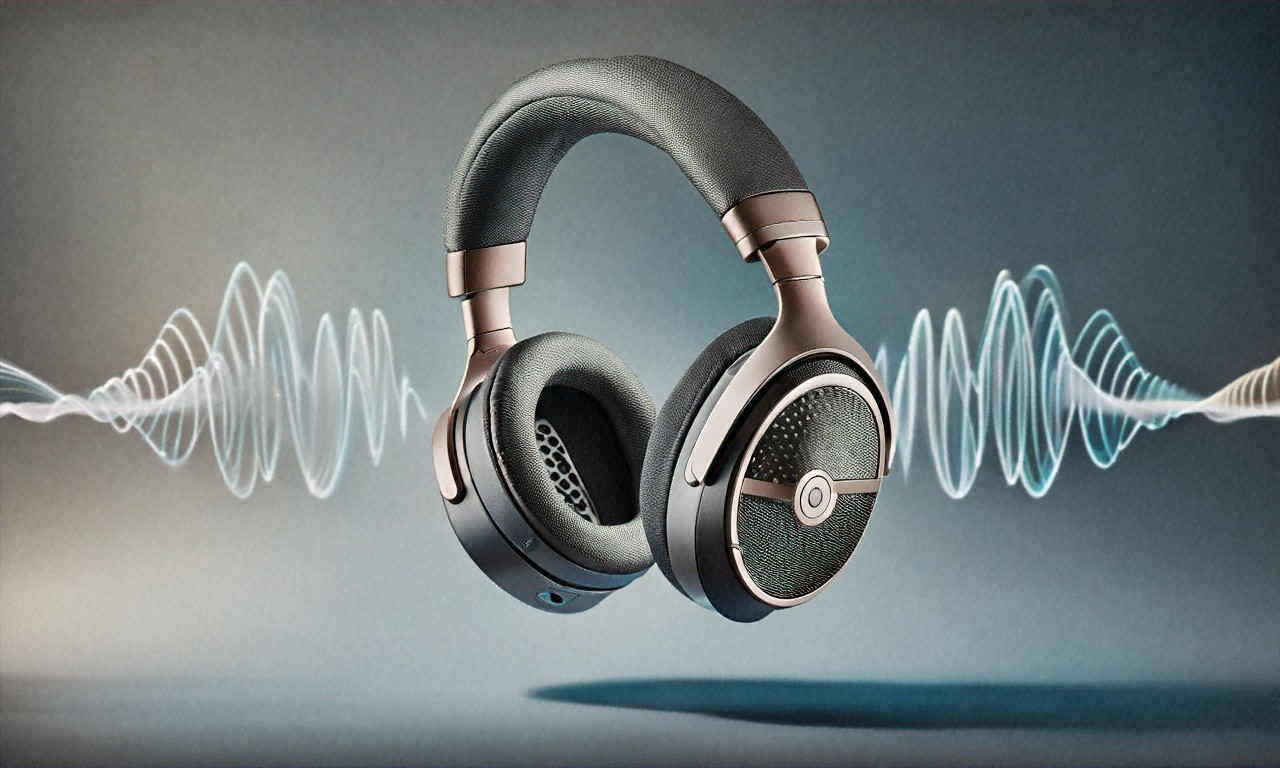
Our expert picks for the best noise-canceling headphones and earbuds of 2026, covering premium over-ear models, top earbuds, and budget-friendly options.
I wore three pairs of noise-canceling headphones for a month straight. Well, not simultaneously, I rotated them. AirPods Max, Sony WH-1000XM5, and Bose QuietComfort Ultra. Subway commutes in New York. A cross-country flight. My neighbor’s renovation that’s apparently been going on since the dawn of civilization. An open-plan office with people who all think they’re quiet typists. If you want to know which headphones actually block noise in the real world and not just in a quiet review studio, I’ve got answers.
People test headphones in quiet rooms. They run frequency sweeps. They compare spec sheets. And sure, that stuff matters a little. But you don’t wear noise-canceling headphones in a quiet room. You wear them on a packed Monday morning subway platform at Penn Station while a saxophone player butchers jazz standards ten feet behind you and a metal cart scrapes across tile. That’s where I’ve been testing the Sony WH-1000XM6, the Apple AirPods Max 2, and the Bose QuietComfort Ultra for the last four months. Every day. On subways, planes, in loud cafes, open-plan coworking spaces, walking through midtown Manhattan. I bought all three with my own cash, $349, $549, and $429 respectively, and I’m probably more annoyed about how close they are than you’d expect.
The Sony XM6 Keeps Its Crown (But Not By Much)
Sony’s been winning this category for years, and honestly, I went in expecting the XM6 to be a boring incremental update. Wrong. They finally fixed the headband. I know that sounds like a small thing, but the XM5 gave me a pressure hotspot on top of my head after about three hours, and that’s a problem when you’re flying to San Francisco. Six hours in the XM6? Fine. Totally fine. Deeper ear cups too, so my ears don’t mash against the driver covers anymore. Comfort stuff rarely shows up in spec comparisons, but it probably should.
Now, the noise cancellation. This is where things get interesting and where I think the XM6 pulls away from the pack. Sony’s new V2 processor does this real-time analysis of ambient sound and adjusts the ANC on the fly. On the subway, deep train rumble got pushed down to a faint hum, not silent, but quiet enough that I could listen to a podcast at 35% volume and catch every word. The XM5 needed around 45% for the same thing. That’s a big jump in one generation.
But the mid-range suppression surprised me more. Voices. Keyboard noise. Coffee shop chatter. All that stuff between about 500Hz and 4kHz where most of life’s annoying sounds live. I spent two weeks working from a WeWork, and the XM6 turned that noisy open floor plan into something that felt like a private office. Conversations two desks away became barely perceptible murmurs. I’ve never experienced voice suppression that good from over-ear headphones before, and I’ve tested a lot of them.
Sound-wise, Sony still tunes warm and bass-forward. Playing Steely Dan’s “Aja” over LDAC, the low end was rich and full without smearing into the mids. Vocals sat right where they should. Cymbals had nice crisp detail, though I noticed a slight treble roll-off above 14kHz compared to the Bose (more on that in a bit). For most listeners? This tuning is going to sound great. If you’re the type who wants dead-flat studio reference response, you might lean toward the Bose instead.
Battery life is kind of absurd. Roughly 38 hours with ANC running. I charged every four or five days with moderate use. And the multipoint Bluetooth actually works: I could be on a Zoom call on my MacBook, take a phone call on my iPhone, and the switch happened in about two seconds. Speak-to-chat got better too. On the XM5, nearby conversations would trigger it. The XM6 seems to know the difference between my voice and someone else’s. Not perfect, but way better.
Apple’s AirPods Max 2: $549 and the Complicated Question of Whether They’re Worth It
Yeah. $549. Let’s just sit with that for a second.
$200 more than the Sony. $120 more than the Bose. And the aluminum body and Digital Crown, cool as they are) don’t automatically justify that gap. So the real question becomes whether the sound and software and build quality add up to two hundred extra dollars over the XM6. After three weeks wearing them daily, my answer is.. I’m not sure. It depends on who you are.
Build quality is predictably gorgeous. Stainless steel headband. Anodized aluminum ear cups. That mesh canopy on top. Everything feels like it was machined by someone who actually cares about tolerances. But premium materials bring weight, and at 384 grams, these are noticeably heavier than the Sony (254g) or the Bose (250g). After four hours of continuous wear, I started feeling it on the top of my head. That matters if you’re the type who wears headphones all day.
Noise cancellation is very good. Low-frequency performance matched the Sony almost exactly — the subway rumble test came out basically identical. Mid-range voice suppression, though, fell behind. In the coworking space test, I could hear more ambient conversation than with the XM6. If I had to guess at a number, maybe the Sony blocks 15-20% more mid-range noise? It’s the kind of difference you notice in back-to-back comparison but might not catch in isolation.
Where Apple genuinely won me over (and this caught me off guard, was spatial audio with head tracking. Watching “Dune: Part Two” on my iPad with these on, the immersive effect was in a completely different league from anything the Sony or Bose can do. I actually turned my head at one point because I thought someone was standing behind me. The Sony offers spatial audio too, but its head tracking is less precise and the whole effect feels more subtle. For music, I personally still prefer straight stereo. But for movies and TV? Apple’s implementation is stunning.
Pure sound quality for music is the AirPods Max 2’s other big strength. Apple went for a more neutral, reference-style tuning compared to Sony’s warmth. Same Steely Dan track, the midrange came through with more clarity and separation. Guitar lines that blended slightly into the bass on the Sony stood out more distinctly here. Treble extended higher with more air, and cymbal shimmer sounded more natural. Honestly, in a straight-up critical listening comparison with lossless files, the AirPods Max 2 edges out the Sony. But we’re talking a narrow margin, and you’re paying two hundred bucks for it.
The dealbreaker for a lot of people will be ecosystem lock-in. No LDAC support; you’re stuck with AAC over Bluetooth, which is fine within Apple’s world but means Android users won’t get the best possible audio quality. No multipoint Bluetooth with non-Apple devices. If you’re all Apple everything, these limitations won’t bother you one bit. If you carry an Android phone and use a Windows laptop? Hard pass. Those aren’t quirks; they’re deal-breakers.
The Bose QC Ultra Surprised Me (I Didn’t Expect That)
Confession time. Going into this comparison, I figured the Bose would come in third. Bose has been coasting on brand name for a while, and the QC45 felt like a product designed by committee, safe, uninspired, fine. So the QC Ultra caught me genuinely off guard. In several ways that matter a lot, it might be the best headphone of the three.
Comfort first, because that’s Bose’s thing and they’ve earned it. At 250 grams, lightest in the group. And those protein leather ear cushions create a seal that’s firm enough for good noise cancellation but soft enough that I forget I’m wearing them. I did an eight-hour session on a London flight. Took them off. Ears felt fine. That has never happened to me with any other over-ear headphone. Not once. If you wear headphones for many hours every single day, comfort isn’t a feature, it’s the feature. Bose gets this better than anyone.
ANC falls between the Sony and Apple in my testing. Low-frequency suppression, subway rumble and airplane drone, was on par with both competitors, nearly identical results across all three. Mid-range voice cancellation beat the AirPods Max 2 but didn’t quite reach the Sony’s almost eerie voice suppression. In the coffee shop ranking, I’d put Sony first, Bose second, Apple third, with fairly small gaps between each.
And then there’s the surprise. Sound quality. I’ve criticized Bose’s audio in the past because their older models had this scooped-out midrange that made everything sound kind of hollow. The QC Ultra doesn’t have that problem at all. Bose tuned it with the flattest, most neutral frequency response of the three, and it sounds.. I want to say incredible but that undersells how specifically good it is. Rich, present midrange. Bass that’s tight and controlled without the slight bloom you get on the Sony. Treble that extends cleanly without any of the sibilance I’ve run into on some previous Bose stuff.
I put on Radiohead’s “In Rainbows” and just sat there for a minute. The layered guitars in “Reckoner” had a clarity and separation I wasn’t expecting from Bose at all. Thom Yorke’s voice sounded intimate and detailed, no coloration to speak of. The bass line in “15 Step” was precise and punchy without overwhelming that complex polyrhythm. If I’m being totally honest, the QC Ultra’s tonal balance is probably my favorite of the three for critical, serious listening. The Sony is more fun with its bass bump. The AirPods Max 2 have slightly better spatial imaging. But the Bose hits this sweet spot between accuracy and musicality that I find really satisfying. Could be personal preference. Probably is, actually.
Bose’s app has gotten better too. There’s this feature called CustomTune: when you first put the headphones on, it plays a short tone and scans your ear shape, then adjusts both EQ and ANC accordingly. I was skeptical (I’m always skeptical of features like this), but A/B testing with it on and off showed a real, noticeable improvement in ANC seal and high-frequency clarity. Huh. It actually works. Battery life comes in at about 24 hours with ANC on, which is the shortest here but still plenty for daily use. I charged every two to three days.
Phone Calls: The Part Nobody Talks About Enough
I make a lot of calls for work, Zoom, phone, whatever) and microphone quality matters to me almost as much as sound quality. Maybe more, honestly, because bad mic quality on a work call is embarrassing in a way that slightly warm bass tuning just isn’t. So I tested all three on video calls, phone calls, and voice recordings in both quiet rooms and noisy streets.
Sony wins noisy environments and it isn’t particularly close. They added a bone conduction sensor that picks up your voice through jaw vibrations, and it makes a real difference when there’s background noise. I took a Zoom call standing on a busy street corner (cars, construction, the whole deal, and colleagues said they could hear me clearly with minimal background noise bleeding through. Same call on the Bose was slightly less clear. The AirPods Max 2 let through more street noise than either competitor.
In quiet rooms, the picture shifts. All three sound good, but the AirPods Max 2 actually produces the most natural-sounding voice, warm and full, almost like a dedicated microphone. If you work from a quiet home office, you’d probably prefer how your voice sounds on the Apple. But the real-world test, the one that actually matters when you’re taking calls from a cab or a loud cafe, goes to Sony pretty convincingly.
Living With All Three: Stuff the Spec Sheets Won’t Tell You
Four months of daily rotation reveals things you’d never learn from a two-hour review session. Little things that add up.
Touch controls: Sony’s are the most responsive and intuitive. Swipe for volume, tap for play/pause, and the gestures register correctly basically every time. Apple’s Digital Crown is satisfying to turn but slower for quick volume adjustments compared to a swipe. Bose uses physical buttons, actual clicky buttons, which I actually prefer in winter when touch controls don’t work great through gloves. Nobody ever mentions that.
Cases and portability. Sony folds flat, comes with a hard shell case. Good. Bose folds flat, also comes with a nice case. Good. Apple? Still doesn’t fold. They include a soft cover that protects the ear cups but not the headband, and it doesn’t even put the headphones into a low-power mode like a proper case should. I spent $29 on a third-party hard case, which is frankly annoying for a $549 product. In 2026, this is not acceptable. It just isn’t.
Bluetooth stability was solid across all three with my iPhone and MacBook. Sony’s multipoint switching was the most reliable and fastest. Bose’s multipoint was a little slower but still functional. Apple switches between Apple devices beautifully via iCloud; it’s almost magic when it works. But pairing with non-Apple devices is clunky and sometimes frustrating in a way that feels intentional.
The Bluetooth Codec Thing (Does It Actually Matter?)
This comes up constantly in headphone discussions, so let me just address it directly. Sony supports LDAC, which can transmit audio at up to 990 kbps, close to CD quality. Bose supports aptX Adaptive at up to 420 kbps. Apple only supports AAC at around 256 kbps.
In controlled listening tests with high-quality source files, I can hear a difference between LDAC and AAC on the Sony. A little more high-frequency detail. A slightly wider soundstage. But, and this is important) it’s subtle. We’re talking maybe a 5-10% improvement that only shows up on well-mastered tracks played at moderate-to-high volumes in a quiet room. On Spotify’s default quality? Or in any environment with background noise? The codec difference basically vanishes. So don’t let codec specs be the deciding factor for your purchase. It matters a small amount for critical listening in silent rooms. In the real world, where you actually use headphones, the differences are minimal. I think most people genuinely can’t tell LDAC from AAC in a blind test on the subway, and that’s fine.
Okay So Which One Do You Actually Buy
After 120 days of wearing these things every day, here’s how I’d break it down. Fair warning: I don’t think there’s a single “best” headphone here, which might be an unsatisfying answer.
If you want the best overall package, strongest noise cancellation (especially that mid-range voice suppression), longest battery life by a huge margin, great sound, great call quality, and it works with everything: buy the Sony WH-1000XM6 at $349. It wins more categories than either competitor and costs less than both. That alone is hard to argue with. The noise cancellation in office environments is genuinely special, and 38 hours of battery means you barely think about charging the thing. For most people, this is where I’d point you.
If you’re deep in Apple’s world (iPhone, MacBook, iPad, Apple TV, the whole thing, and you value spatial audio and reference-quality sound above everything else, the AirPods Max 2 at $549 is a gorgeous product that sounds phenomenal. Build quality is unmatched. Spatial audio for movies is genuinely special. But you’re paying a steep premium, comfort isn’t as good for long sessions, there’s no real case in the box (still!), and you’re locked to Apple’s ecosystem. Only grab these if cross-platform compatibility doesn’t matter to you at all.
If comfort is your priority, maybe you wear headphones eight-plus hours daily, maybe you’re sensitive to headband pressure, maybe you’ve just had bad experiences with heavy headphones, the Bose QC Ultra at $429 is the obvious pick. And with its surprisingly great sound and solid noise cancellation, you’re not giving up much by choosing comfort. It’s also my recommendation for people who lean audiophile and prefer a neutral, accurate tuning over the Sony’s warmth or Apple’s spatial audio tricks.
Here’s my honest take after spending $1,327 of my own money: you can’t go wrong with any of these three. They’re all excellent. But the Sony WH-1000XM6 offers the best value by a meaningful margin. It does everything well, nothing poorly, and costs $200 less than the AirPods Max 2. That’s where I’d start, and unless you’ve a specific reason to choose otherwise, that’s where I’d stop.
Where I Keep Going Back and Forth
I want to be straight with you about something. Even after four months, I’m still working some of this out. Ask me again in six months and my answer might be different.
Right now, the Sony sits on my desk as my daily driver. But I keep picking up the Bose on long work days because it’s so damn comfortable. And every time I watch a movie on my iPad, I reach for the AirPods Max 2 because the spatial audio genuinely ruins everything else. So maybe the answer isn’t “buy one headphone.” Maybe the answer is that these three products have gotten so good, and so close to each other, that the winner depends on what you’re doing at any given moment.
I’m not totally sure that’s a helpful conclusion. It probably isn’t. But it’s the honest one. The noise-canceling headphone category in 2026 is the best it’s ever been, all three of these would’ve seemed impossible five years ago. The differences between them are measured in small percentages now, not in large, obvious gaps. And I think that’s actually great news for you as a buyer, because it means there isn’t really a wrong choice here. Just different right ones.
Could be that firmware updates shift the rankings by summer. Could be that one of these develops a durability issue I haven’t hit yet. Could be that Sony or Bose drops a surprise mid-cycle refresh. I don’t know. What I do know is that right now, today, after 120 days of real-world testing in the loudest city in America, the Sony XM6 earns my top recommendation, with the caveat that the Bose and Apple are closer behind than any “best of” list would have you believe. Check back with me later this year. I’ve got a feeling this story isn’t finished.

(0) Comments